Optimizing Vehicle Manufacturing Operations
Generative Research & Product Design
Key Accomplishments
Discovered key problems impeding vehicle production quality on Ford’s vehicle assembly plant floors.
Spread awareness of the discovered problems and evangelised a shared vision among several stakeholders to address them.
Designed a mobile app which resulted in:
- Reducing communication delays on the plant floor by 30%.
- Enabling supervisors with critical and time-sensitive information.
- Automating arduous and redundant reporting.
- Digitizing People management and reporting of Quality issues.
Problem Space
Boost the vehicle production quality and speed by enabling the vehicle assembly staff. By:
Discovering problems faced by Ford’s plant floor workers.
Designing solutions for the identified problems.
Boost their skills and confidence in their actions.
Project Timeline
- Led research & product design
- Deriving key insights
- Designing product features
- Stakeholder alignment
- Tech. feasability evaluation
- Agile UX iterations & Dev-handoff
My Process & Responsibilities
Discovery - Research
Methods: Contextual Inquiries, Interviews, Focus Groups, Design Probes.
- Research spanned over 9 months
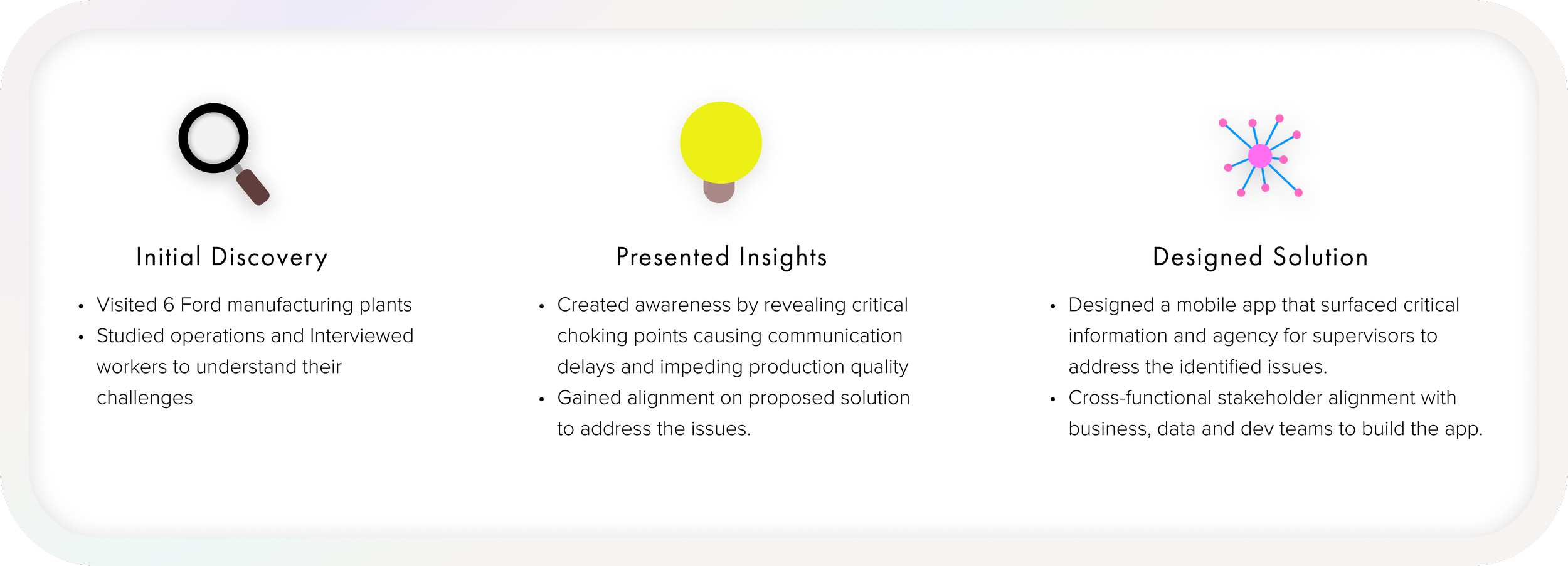
- 6 Ford manufacturing plants visited
- 40+ users interviewed
- HCD Supervisor(my manager)
- (me) Project Lead, UX Research
- 1 Sr UX Researcher
- 1 UX Designer
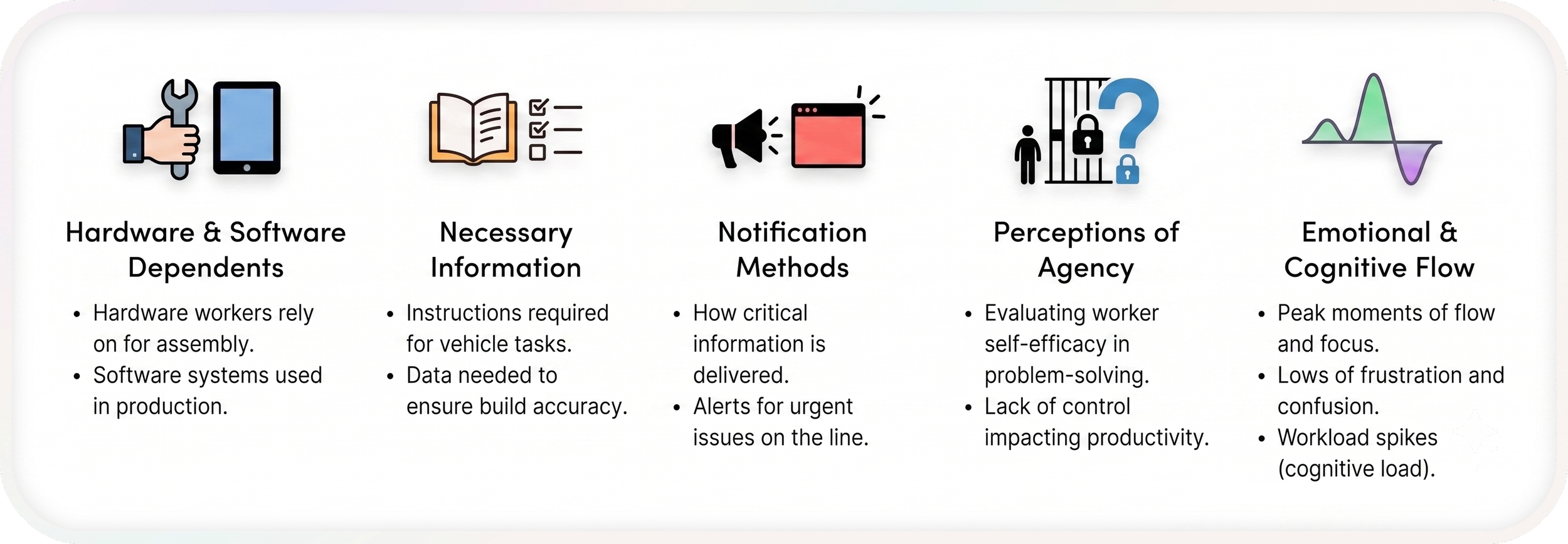
Research Objectives
Based on the preliminary insights, I created the following research objectives to uncover and guide our research and discovery.
Research Methods
I employed a variety of research methods at different stages of discovery to extract valuable insights from users.
Contextual Inquiries and Shadowing - We began our research by shadowing the floor supervisors and workers around as they went about their day on the plant floor. As supervisors kept busy and were always moving around, I later adapted to waiting for their downtime at their station while I gathered my observations and questions for them.
Follow-up Interviews - I built rapport with supervisors and reached out to them for an offline interview, where I would ask further clarifications and follow-up questions regarding my observations.
Focus Groups and Design Probes - Further into our research trips, as broader insights started to appear, I conducted workshops with users where I asked them to envision solutions to their problems. It helped me understand their mental models and also the know-how of floor operations and technical constraints.
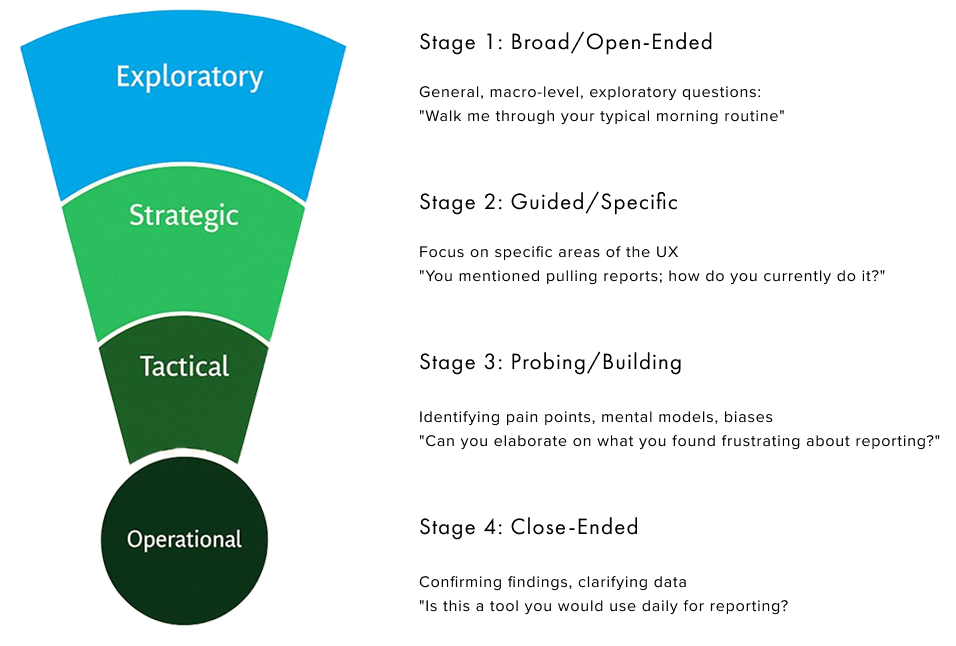
Qualitative Funneling - My approach to research on this project can be summed up in four stages:
Challenges in Research
Jargon and Lack of Context - As users spoke in acronyms, it was important for us to ask follow-ups until it was clear.
Lack of trust - Users were wary of usas we were outsiders, representing the corporate. It was vital for us to win their trust and assure them that we were, in fact, advocating for their needs.
Semi-Structured Interviews - Given the nature of conversations, we adapted to having open-ended conversations instead of a rigid questionnaire.
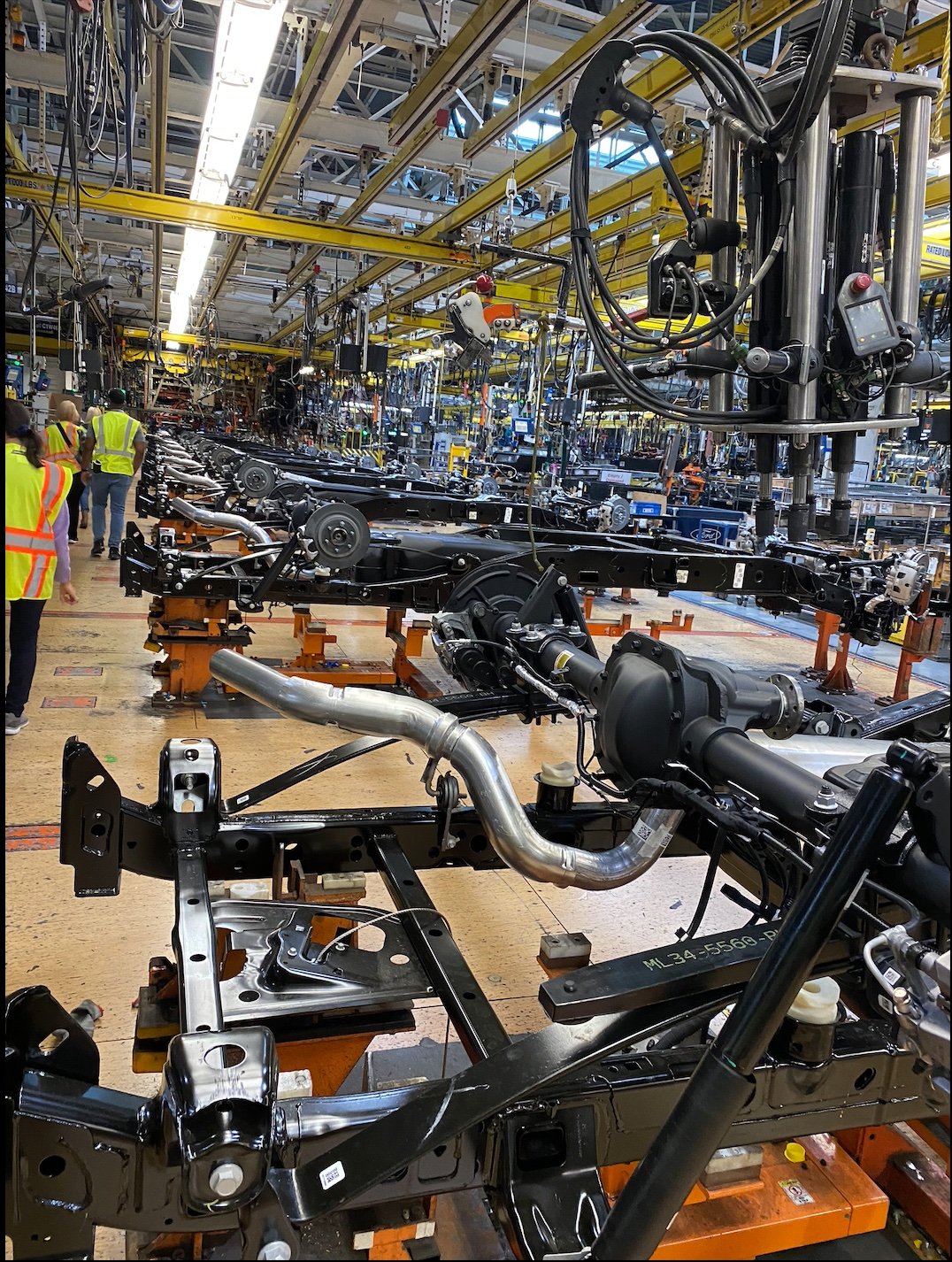
Walking down the Production Line.
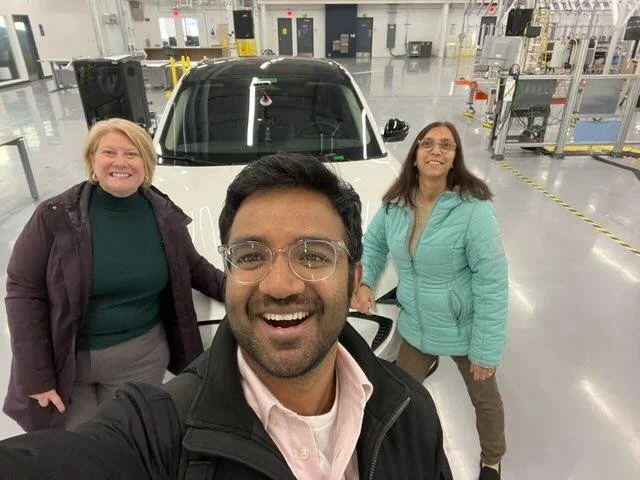
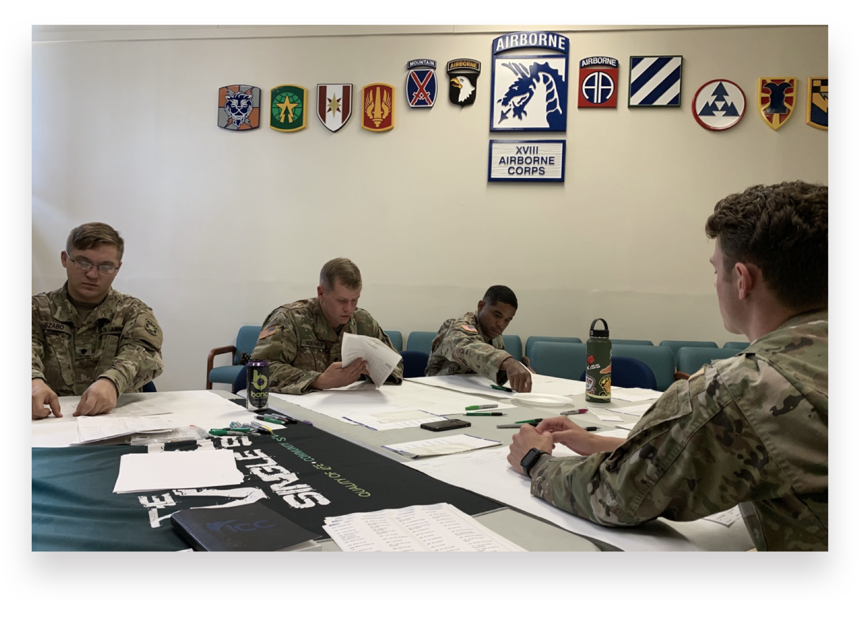
Our team and I at one of the Ford plants
Insights
Methods - Affinity mapping, User Journey Mapping, Personas, Stakeholder Presentation.
Personas - We created personas for supervisors and assembly workers based on research to anchor ourselves to their needs. These personas were built based on social dynamics like their age, years of experience, and prior affiliation with Ford, as we discovered that these factors shaped their experience of working on the plant floor.
User Journey Mapping - I started building User Journey Maps for our Personas as a tool to identify:
- Their emotional and cognitive highs and lows,
- Map the variation between their ideal-world experience vs current experience
- Identify our knowledge gaps for further research
Deriving Insights - I conducted brainstorming sessions with our research team, where we exchanged our insights and conducted affinity mapping to ultimately discover not just the WHOs and WHATs, but the WHYs behind our observations.
We discovered that lack of access to information, awareness of urgent issues, and prioritization of issues were impeding workers and their supervisors from functioning with confidence and efficiency.
My contribution: I was instrumental in identifying the challenges faced by supervisors, who manage the plant floor workers.
Supervisors were the most crucial line of control and were solely responsible for:
- managing assembly workers.
- vehicle production quality and issues.
- reporting to management and carrying out their orders.
And we later learned that they were facing severe burnout caused by the workload and other stressors.
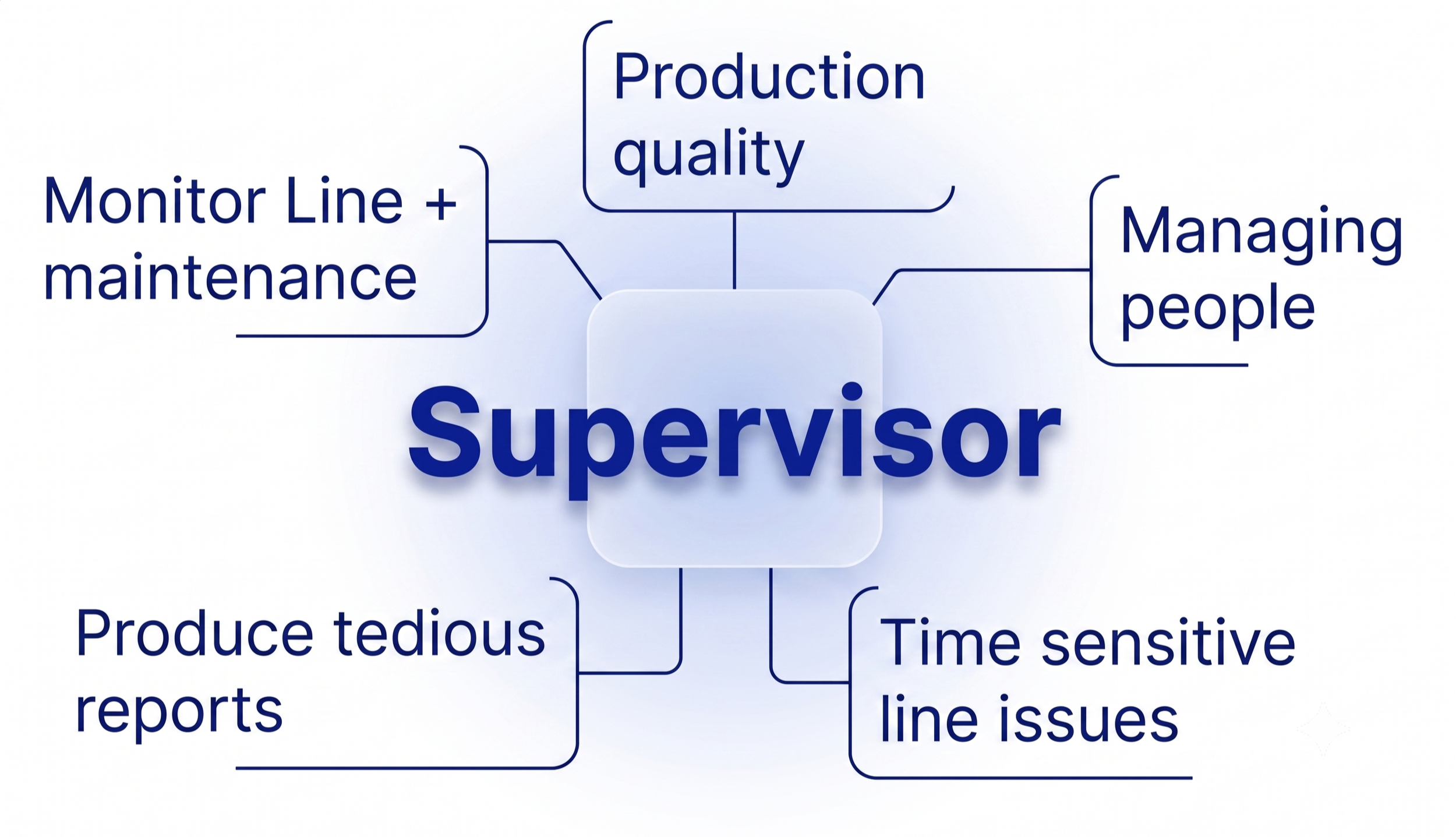
A Paradigm Shift - The findings we shared with the broader Manufacturing group that we were part of were well received and helped pave the way for other teams like ours to build solutions to address the problems.
The Pivot - Based on the findings, I proposed that addressing the needs of the Supervisors is the most impactful and value-for-money action for our team.
This led to me leading the design and development of the mobile application to address supervisors’ needs.
- Ensuring the production line starts without any quality or supply issues
- Substitute missing staff on the production line before the shift starts
- Lack of awareness of urgent and ongoing issues
- Time lost in navigating unintuitive and disconnected software for getting critical information
- Solely responsible for managing 50+ workers they don’t personally know
- Constantly juggling multiple responsibilities of delegating, managing, QC, and reporting.
Designing Solutions
Methods: Co-design, Concept Testing, Usability studies
I solely led the efforts to solve the problems faced by Supervisors.
I designed a mobile app that brings the most crucial information and agency Supervisors need at their fingertips and accelerates plant-floor issue resolution.
Key Features:
Designed a mobile app which resulted in:
- Reducing communication delays on the plant floor by 30%.
- Proactively alerts supervisors of the pressing quality issues
- Enabling supervisors with critical and time-sensitive information.
- Automating arduous and redundant reporting.
- Digitizing People management and reporting of Quality issues.
- Designed in iterations with user feedback from Concept Testing and Co-design sessions
- Usability testing conducted
- 10 features designed
- 25+ screens designed
- HCD Supervisor(my manager)
- (me) Project Lead, UX Design & Strategy
- 1 Visual Designer
Designing the Mobile Companion App
- I designed 10 unique product features, incorporating them into the mobile app to address the needs of supervisors.
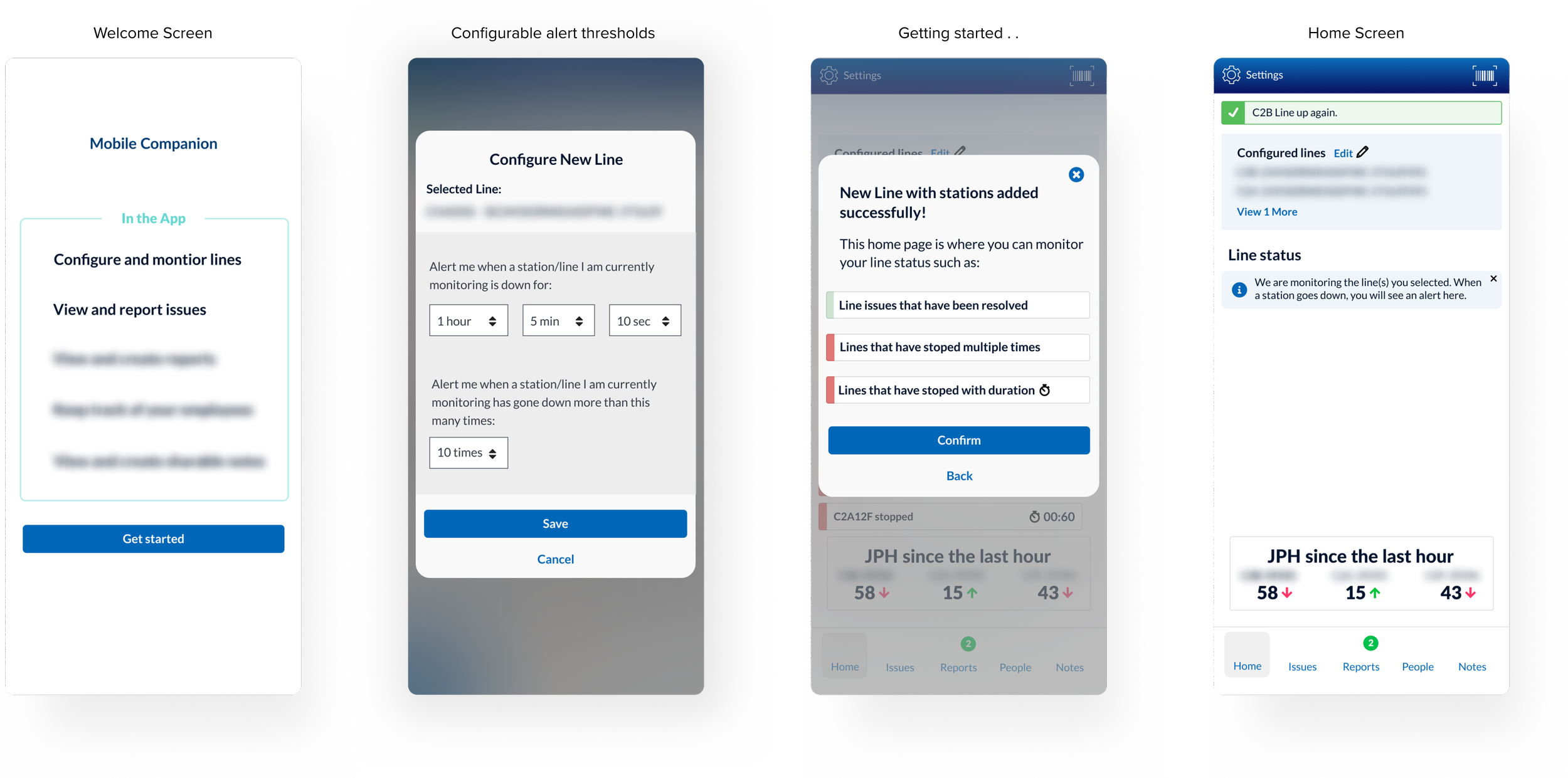
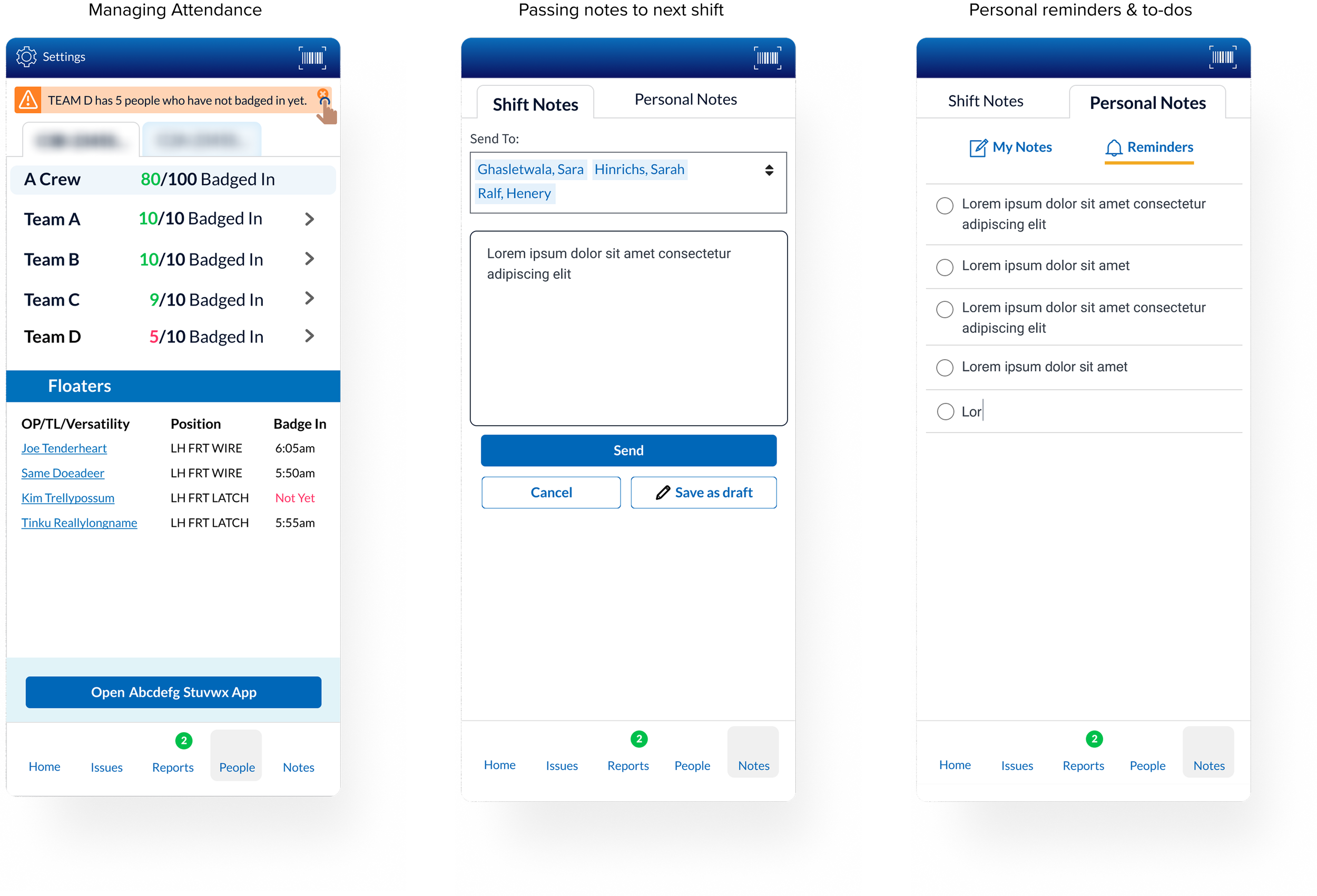
Design Process
I applied Lean UX principles to the design process and took an iterative approach to designing solutions for the problems we identified.
Design probes - As we entered the more mature stages of our research, I used design probes to gauge users’ mental models and gain know-how on current practices.
Concept Testing & Co-Designing- Keeping the complexity of the existing systems, the variety in modes of operations, and the constraints on the plant floor, I started involving users from early on in the design process by conducting workshops where I would ask them to validate my early prototypes and engage them in brainstorming sessions where I would help them conceptualize their envisioned ideas for solutions.
Usability Testing - As I refined design concepts further, I conducted usability testing for user feedback to ensure that the designs met their needs.
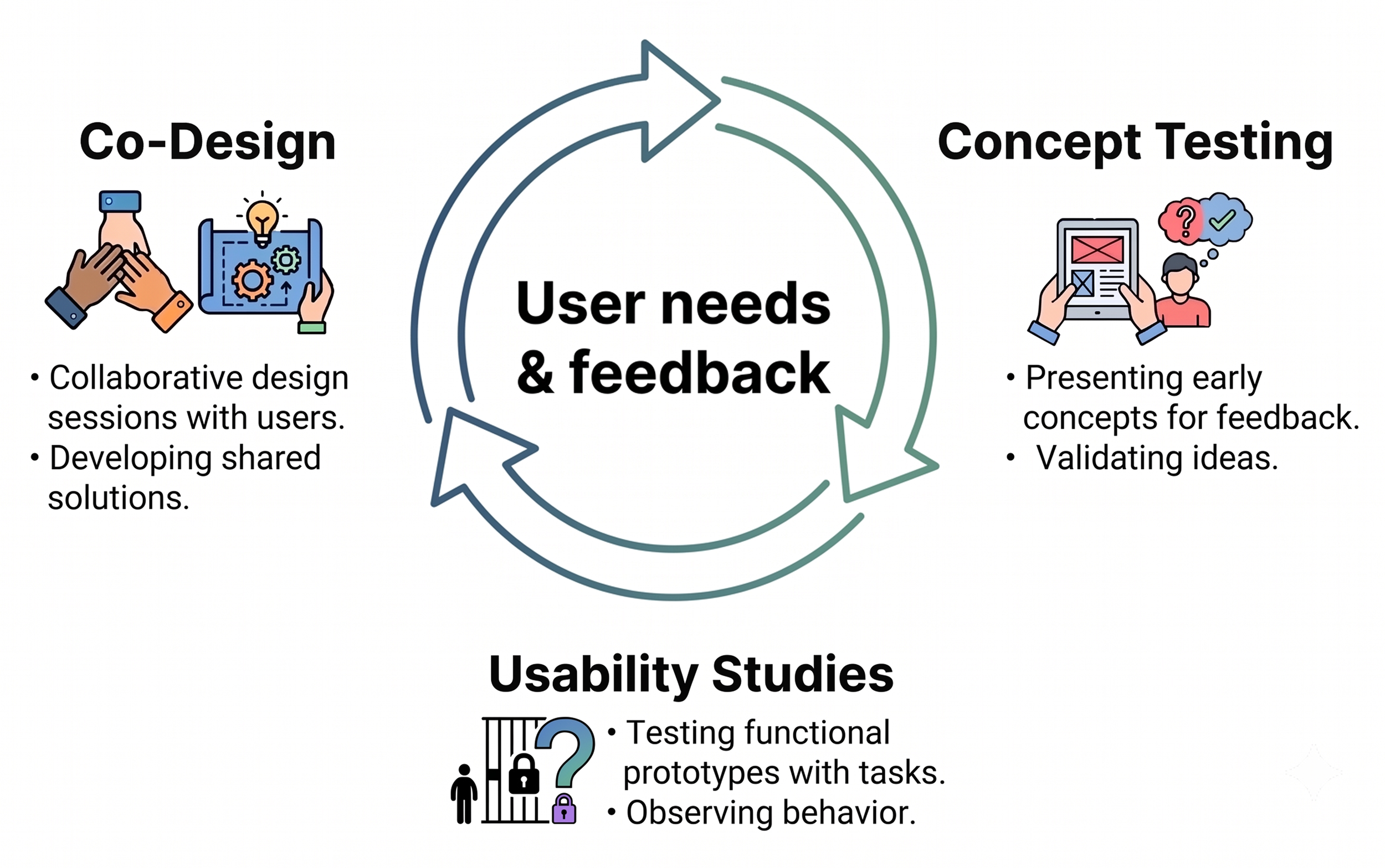
Design Principles
I devised the following design principles to help guide our design while staying true to the user's needs and gaining the wary users’ trust over time:
• Cannot be a chore, or come in the way of doing their work
• Error-free and NO false positives
• Easy to use with gloves on
• Minimal learning curve
• Mimicking their existing practices where applicable
• Not replacing their human interactions with software
Extending Beyond Design - Development and Resources
Given the complex data-driven nature of the features I designed, I continued working with the business and development teams as the Project Lead to help build the app features in real-time.
Procuring data sources and infrastructure - With the help of Stakeholder Alignment workshops, I facilitated collaboration between the dev team and other competing teams who also owned the data and resources we needed.
Facilitated a shared vision for an app for supervisors
Convinced other teams to provide us with the data and infrastructure we needed for the app
Workshops to understand their data sources vs our requirements, and exploring alternatives.
Agile Design Revisions - The alignment led to several design revisions by me as we had to navigate around both infrastructure-centric and political constraints.
Dev Alignment and Guidance - I worked closely with the developers to ensure we stayed true to user needs.
- Facilitating SME meetings to understand the existing infrastructure, data sources, constraints, etc.
- Designing workarounds for features that could not be developed due to the constraints.
- Delegating negotiations with other teams to allow us the data and infrastructure needed to build our mobile app.
- Helping them understand the intricacies of feature specifications like alert thresholds, defining assembly lines, etc.
- Designing workarounds for features that could not be developed due to the constraints.
Reflection
Launching new solutions in a large organization with established practices and limited infrastructure is challenging. Even more so when you are battling age-old practices and belief systems held by the teams you work or compete with. It requires conducting mutually beneficial negotiations with other teams, a thorough understanding of the underlying technologies and infrastructures, constant pivots, and the ability to handle multiple changes to the intended design.
This project also presented me with an opportunity to officially lead a team of designers, and be an effective leader of the vision, delegate tasks, and a guide when needed.