A Tourism Video for Bloomington 2050
Prompt: Envision a future for Bloomington city in the year 2050. Explore the notion of space, energy, transportation, food and networks for the future of Bloomington and produce a tourism video dated in year 2050 based on the insights.
Design Concepts in the Video
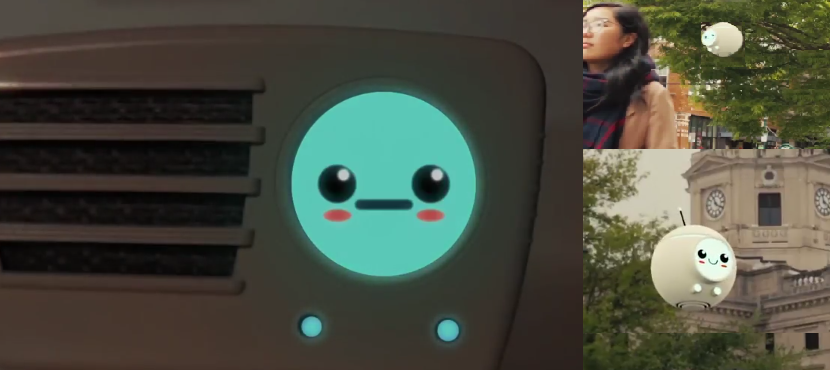
Robio - Features the notion of technology subscribing to people’s needs rather than the other way around. It is a personal companion which brings the information that people are in need of.
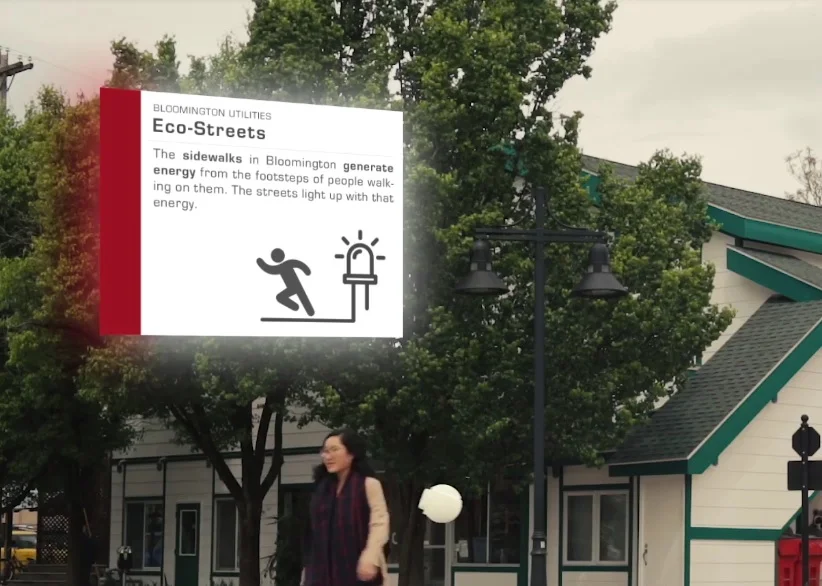
Sustainable City – The Eco-streets represent the traits of an organic and a sustainable city which incentivizes its people for adapting a healthy and sustainable lifestyle and also generates energy innovatively with the use of untapped resources like pedestrians walking on streets.
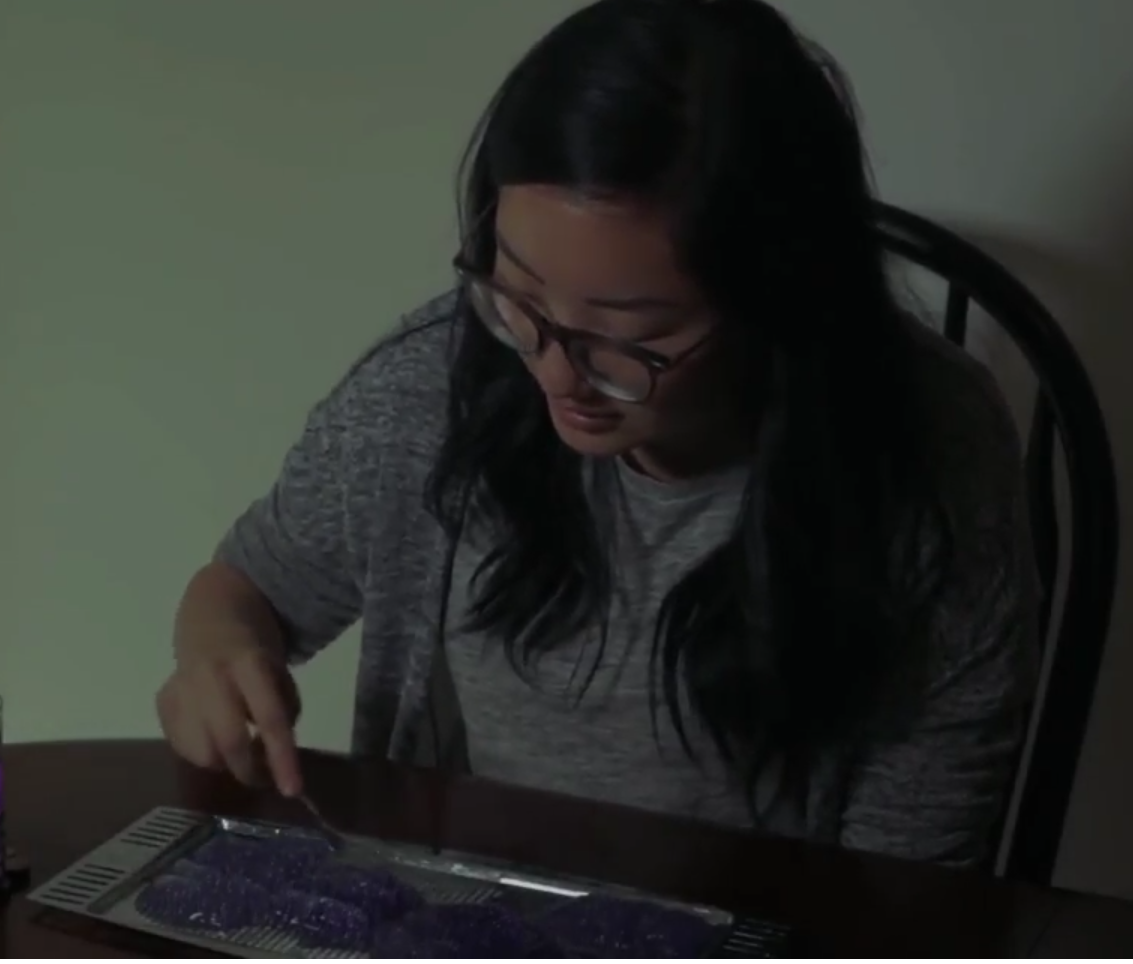
3D Printed Food
The Concept arrived from Stella’s research on food. 3D printed food was a solution for food wastage, and issues related to convenience, population, space and energy consumption which happen because of the food delivery business in Bloomington.
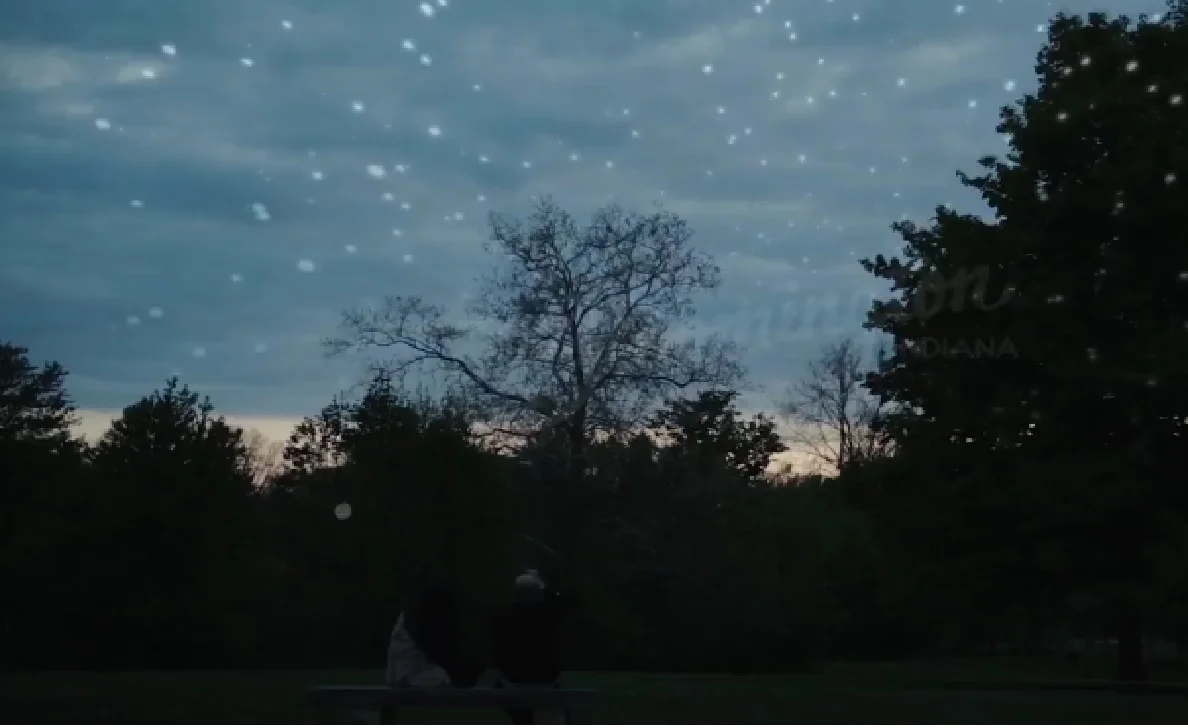
Astropark -The parks conduct night shows educating children and the society about stars and on-going technological innovations. It is also Bloomington's quirky way of bringing people out of their homes and bring them together as a community
The Big Picture
Team: Shelby Stephens, Stella Jeong, Jim Walsh, Me | Duration : 2 weeks | Type: Academic

Project Milestones
Milestone 1: Choosing the four topics - We chose Network, Space, energy and Food to explore for our video. Each of us took charge of single topic. Shelby interviewed WIUX radio (Network), Stella spoke to BtownMenus delivery service(Food), and to explore the notion of (Space), Jim spoke to Astronomy Graduate Department Chair, and general public at the Observatory. I chose 'Energy'.
My topic - Energy
Why energy. How did I define energy?
Traditionally, I viewed electricity and fuel as forms of energy. But now, I questioned that notion. Energy utilization could mean all forms of consumption which happen in our urban societies. Electricity, food, water, heat, sewage, they all are various forms of energy. I decided to explore such a notion of energy. From further research, I realized that my notion of energy ties in very closely with sustainability. So I decided to look into areas pertaining energy management, production and conservation.
People I shortlisted

IU’s very own initiative to promote sustainability on IU campus.

Bloomington City's department for Economic and sustainable development.

Bloomington based startup, they sell sustainable and smart housing solutions.
Why I chose Bloomington city dept. - From talking to all three of them, I learned that Bloomington department's work directly influences the entire population demographics of Bloomington. It was during the interview that I learned that they do not directly regulate the initiatives taken by IU, but they are still in charge off all the government related initiatives that happen on the IU Campus.
Milestone 2: Contextual Inquiry - with Jacqueline Bauer – Coordinator, Bloomington City department of Economic and Sustainable development.
Process: I started my questions for the Contextual Inquiry based on the observations I had for 15 minutes before the interview. The follow-up questions were in-turn probed based on the responses during the first interview and from my observations of her tasks during her daily chore.
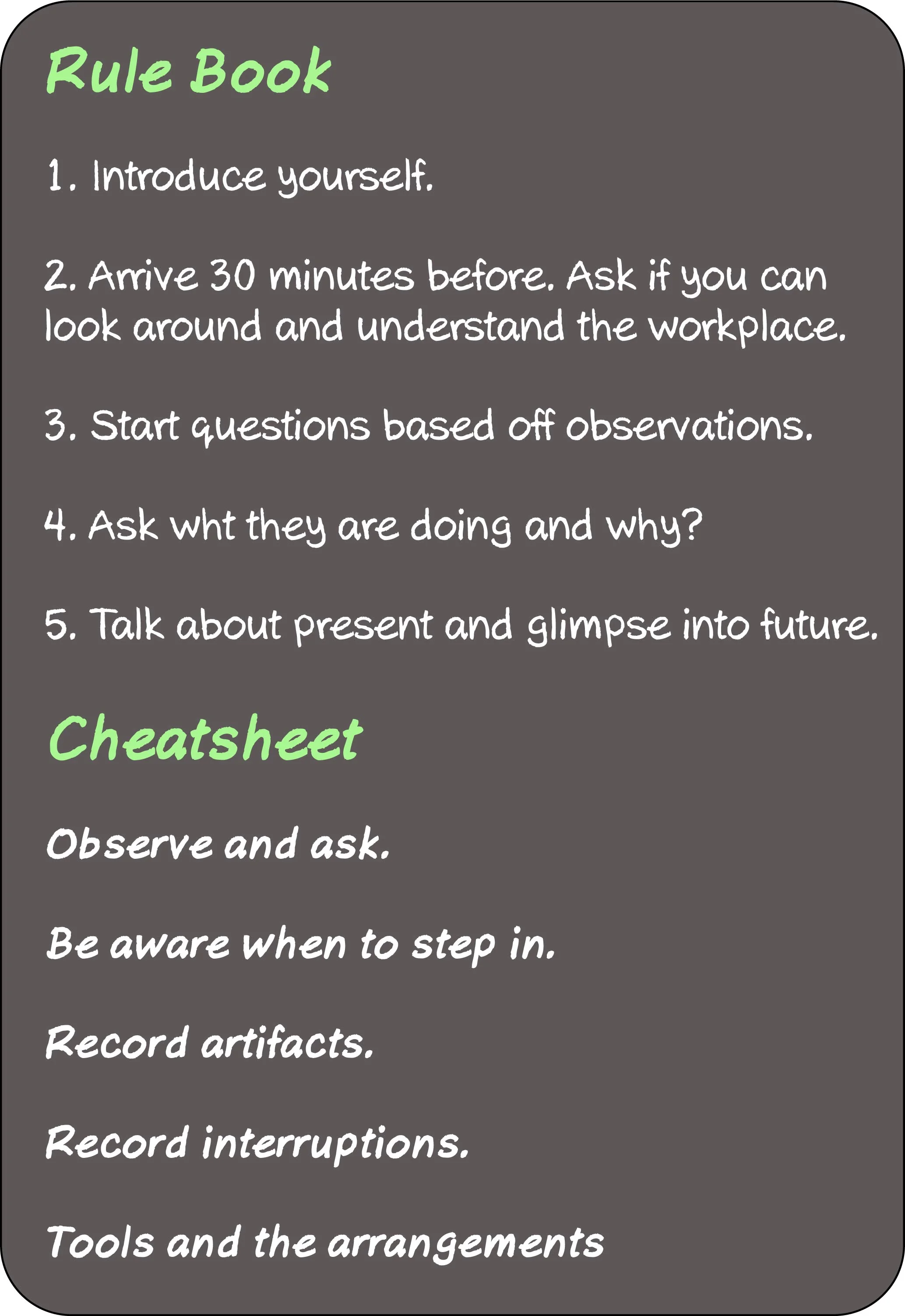
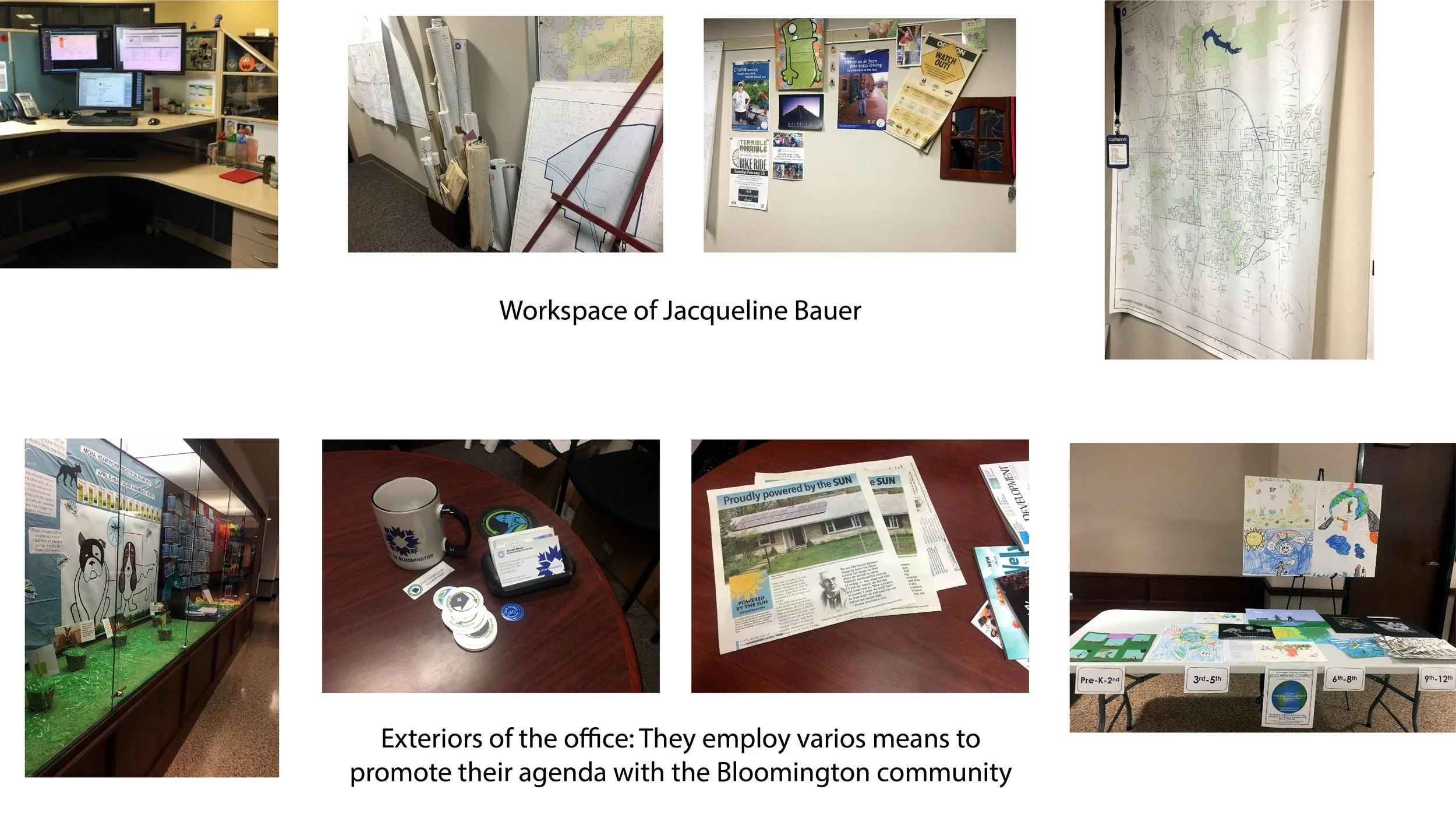
Limitations of the Contextual Inquiry- Other major part of her daily chore was communicating with organisations and groups within the department and also outside in Bloomington. Due to the confidentiality issues I could not follow her during that part of her day.
Analysis of my Contextual Inquiry
I created 50 post-it notes (see below) based on the insights gained from the contextual inquiry. From further analysis, I categorized the insights into Facts, Ideas and Current Practices. The 'Ideas' were co-generated during the CI with Jaqueline.
Milestone 3: Affinity Mapping
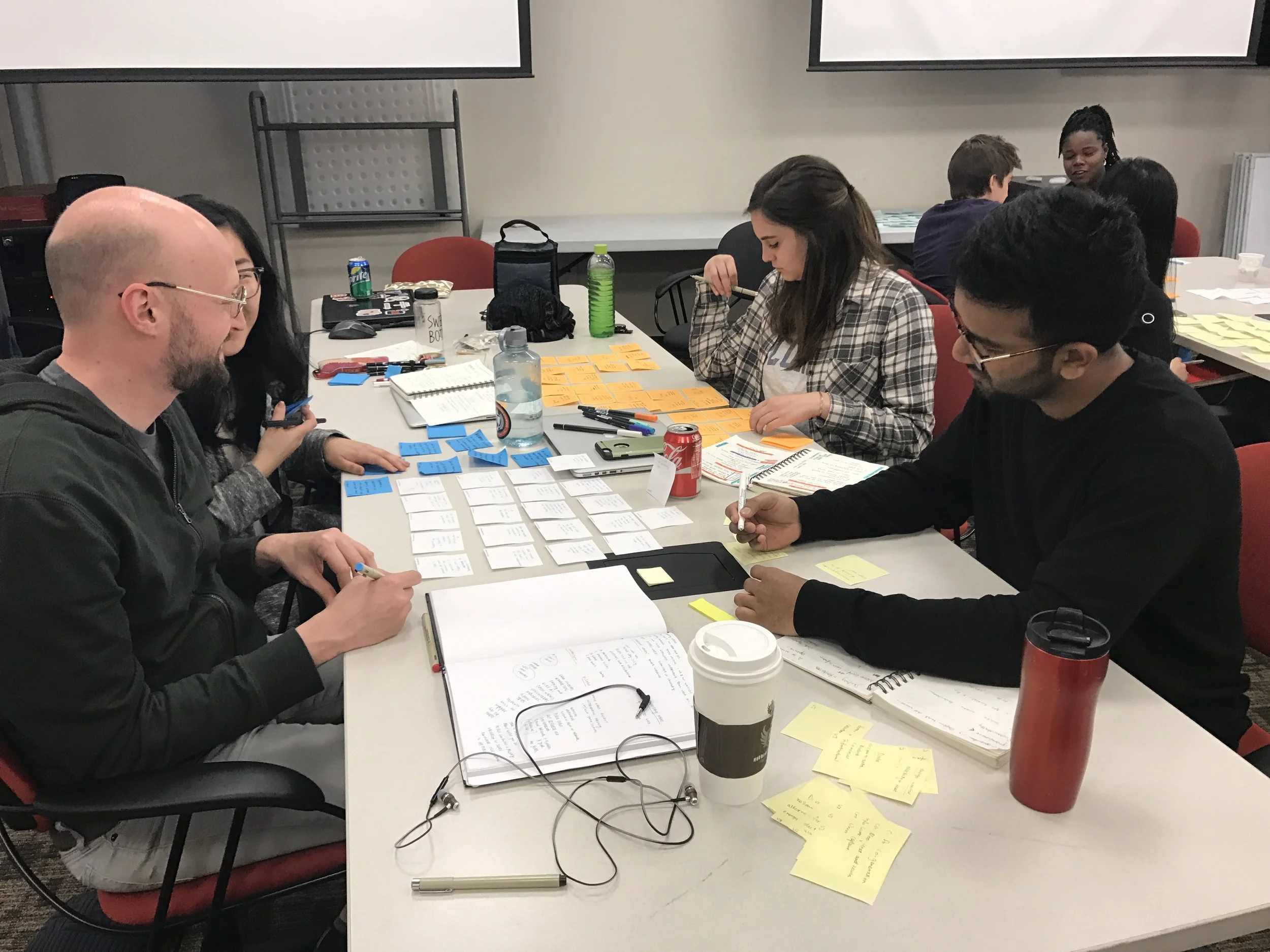
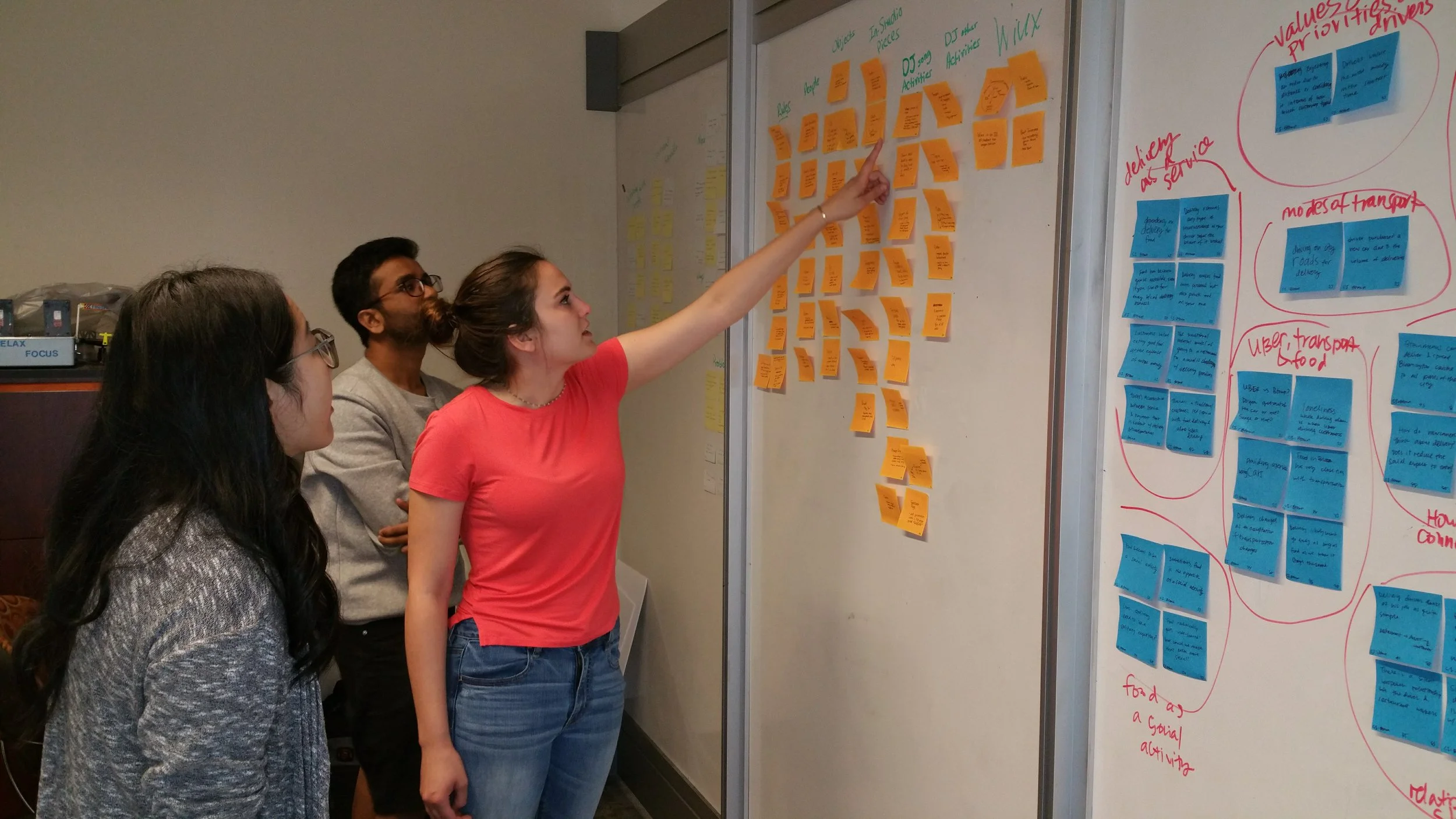
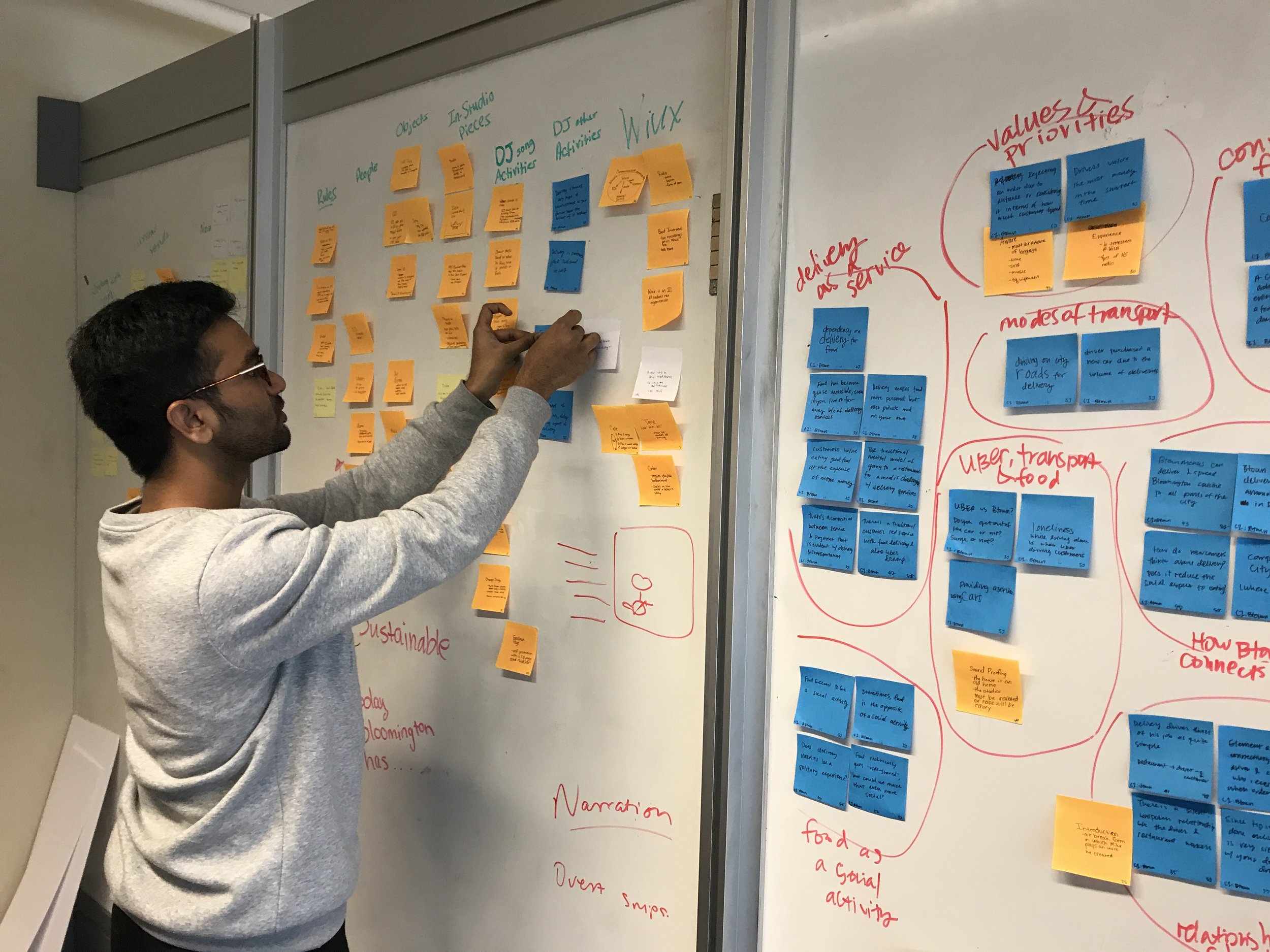
We conducted an affinity mapping using 200 post-it notes that we generated (50 each) from our individual Contextual inquires.
- We first grouped our post-it notes separately.
- We individually explained to each other what we had on post-it notes.
- The method which really worked for us was to individually compare what we have with the rest of the insights from other topics.
- We iterated on each other's ideas by regrouping the concepts and co-generated 22 concepts for our tourism video.
Around 30 concepts generated from the Affinity Mapping insights:
- Enclosed bike trail above the buildings?
- Boat buses?
- 3D printed food
- AI radio djs
- What if water was the energy source?
- Lightning rod?
- What if the main source of news was radio?
- What if the news on the 40’s was predictive?
- What if radio is dead?
- Self cleaning spaces?
- What if the bike generates energy?
- What if the biking wasn’t necessarily exercise?
- What if vegetation/food grew on the side of buildings?
- “Give energy to get energy”
- Low-tech/no phone future
- What if there are no longer delivery drivers?If not, what will it look like?
- Public bikes
- What if restaurants were on wheels?
- What if you eat on an autonomous restaurant truck?
- What if food was an energy source
- A city that doesn’t create waste but manages it?
- Astronomy park
- A way to experience the universe
- A place to bring people together
- Radio announcements
- How to get to it?
- What does the transportation look like?
- A car that runs on food?
- B-line trail all over btown or to the lake?
- What if Btown was a bike only city?
- What if IU was all continuing education with only a few on campus teachers?
- What if bloomington is an open international zone?
- Organic City
We moved forward with the concepts we felt strong about and also considering the time and labour constraint. We chose Astronomy park, 3D printed food, AI Radio DJs (later called as Robio) and Low-tech/no phone and Organic city for the future of Bloomington.
Milestone 4: Video Production
We started with ideating collectively to conceptualize how our concepts can be visually represented in the video. We had a time constraint of limiting the video to 2 minutes. It was important that we planned out every single frame of the video. We sketched different scenes to introduce our concepts and iterated on them.
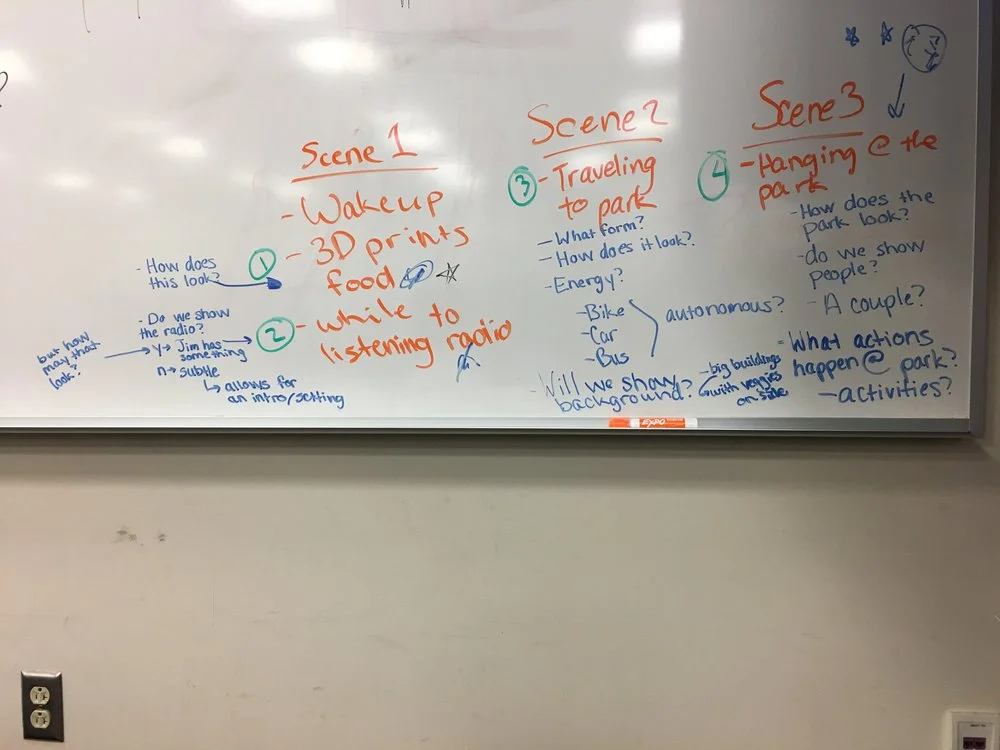
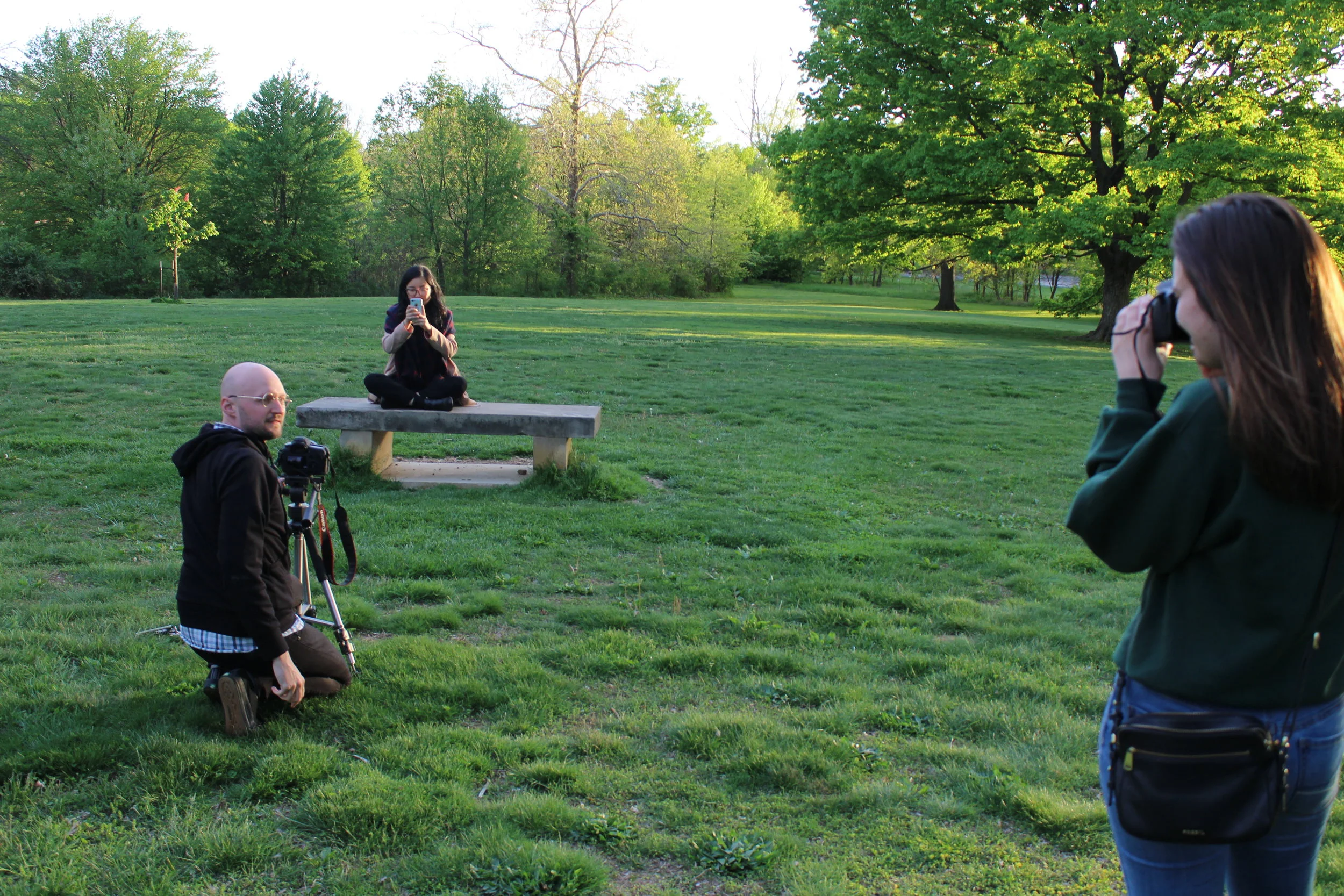
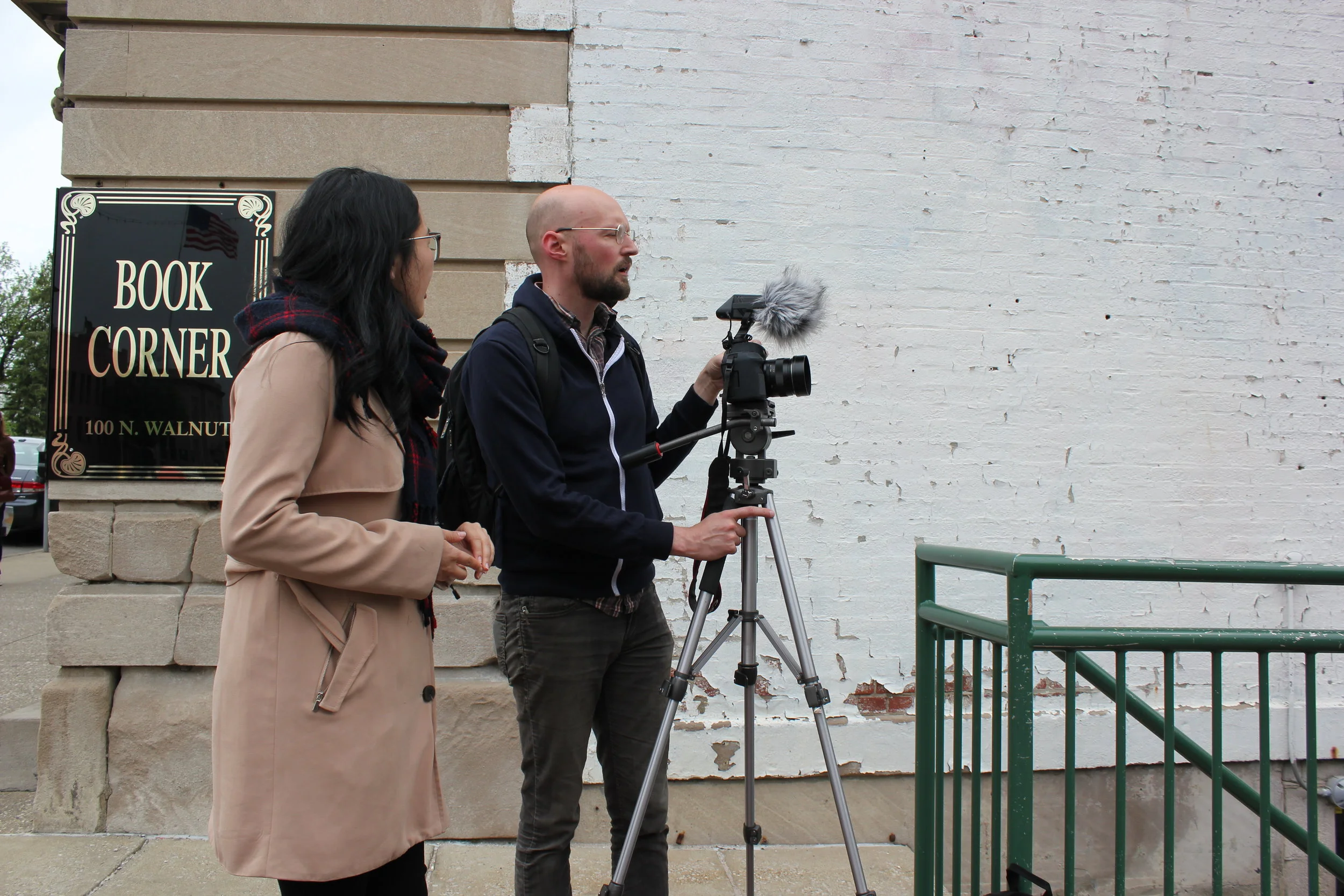
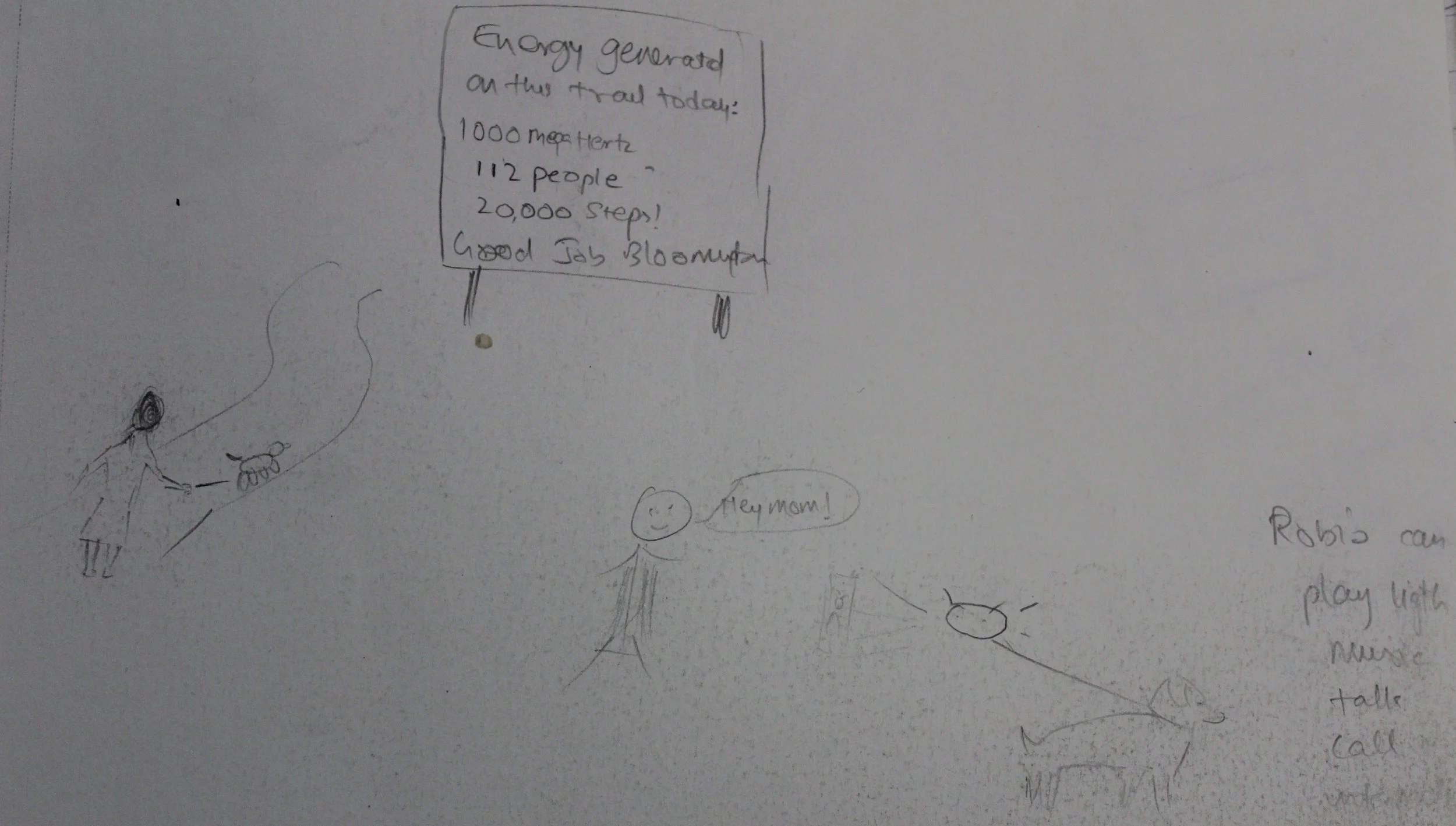
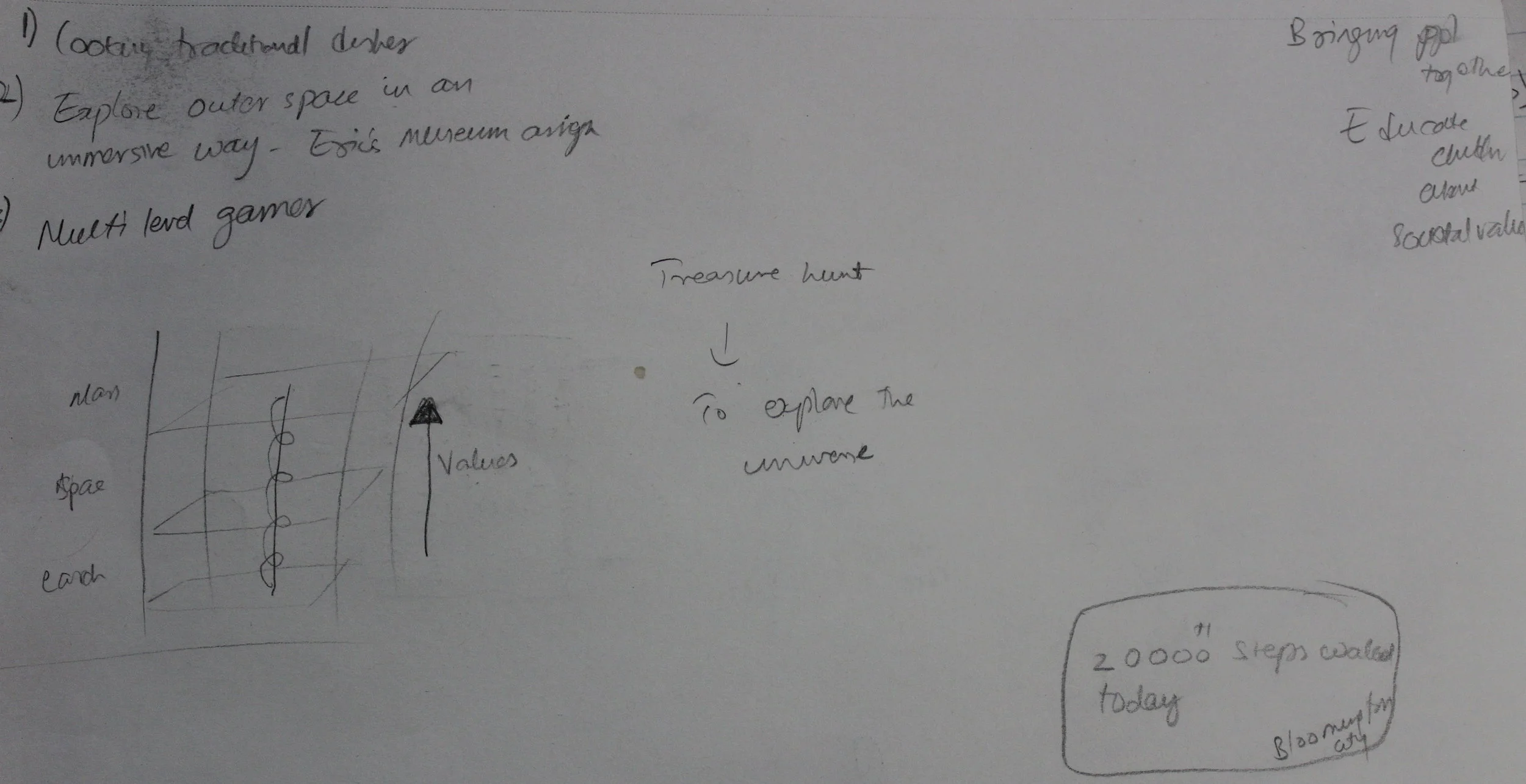
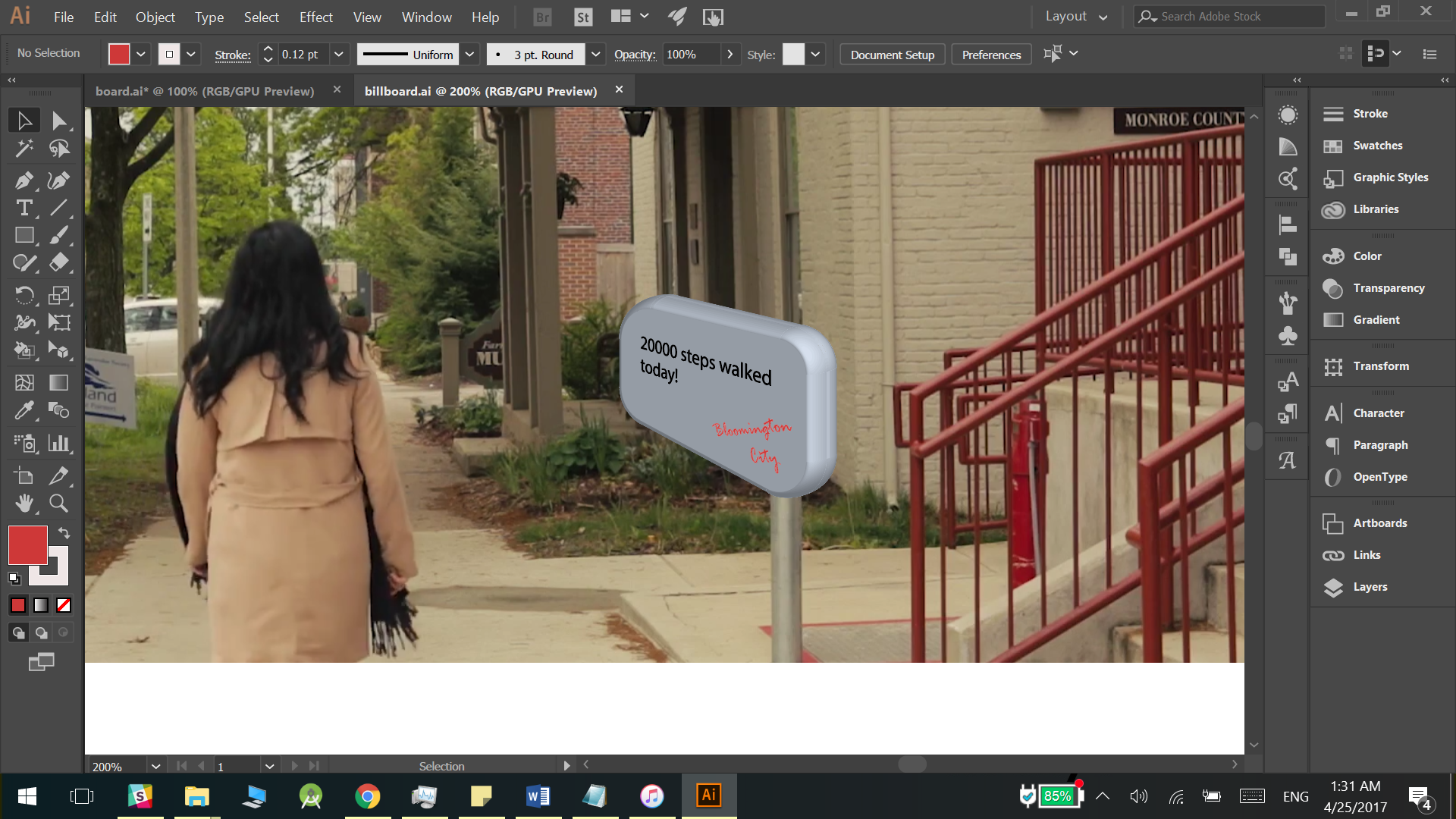
My Contribution - I took up the role of content curator and established a vision that the concepts we have for our video need to be based on our research and also proposed a perspective that the future of Bloomington should make technology subscribe to people and not the other way around, like it is now.
I contributed for creating script for the video and also drew storyboards for the video alongside assisting Jim with video production by creating 3D model for Billboard.
Reflection
Video is a powerful tool when it comes to expressing ideas and marketing solutions. With a mere 2 minute long video, we did a good job of conveying over 3 main concepts, alongside passively conveying few other minor concepts like 'weather forecast in dreams' and how intelligent Robio is.
We had the opportunity to decide how should the future of a city look like. Every concept we introduced was an informed and conscious choice we made based on our beliefs and existing practices of the City of Bloomington. In a way, we executed our 'designer judgement'.
We used Contextual Inquiry followed by an Affinity mapping in order to generate concepts for this project. This helped me reflect about how to approach such projects, what kind of research methods would be ideal under what conditions.
Striking a balance between creative expression and research was one of the challenges our team faced during the project. The simplicity in making and expressing content using the video medium opens up possibilities of introducing new concepts on the go. We always reminded ourselves about the fact that the video needs to address the the future of Bloomington and the concepts the introduce should match with our research and core principles.