Avahan
Empowering Indian youth for career aspirations and individual growth.
Capstone Project | 2.5 months | Team size: Self.
Design Space
For my capstone, I challenged myself to design a technological solution to curb one of the complex socio-political problems
faced by the middle class and low-income groups of developing economies. Taking advantage of my familiarity and connections with people in India, I constrained my focus to India.
Final Design: Avahan
Situation: From my research I learned that today, the Indian middle and low-class population can be characterized as a homogeneous workforce with inadequate skills and professional competence. The majority of youth are devoid of awareness and resources to train themselves to meet the needs of the new sphere of opportunities produced by the rising Indian economy in tech and other upcoming fields.
Solution: Avahan is an Online community which enables users to gain early-on exposure to diverse disciplines. It brings like minded individuals together to help each other learn and achieve in a cost effective manner.
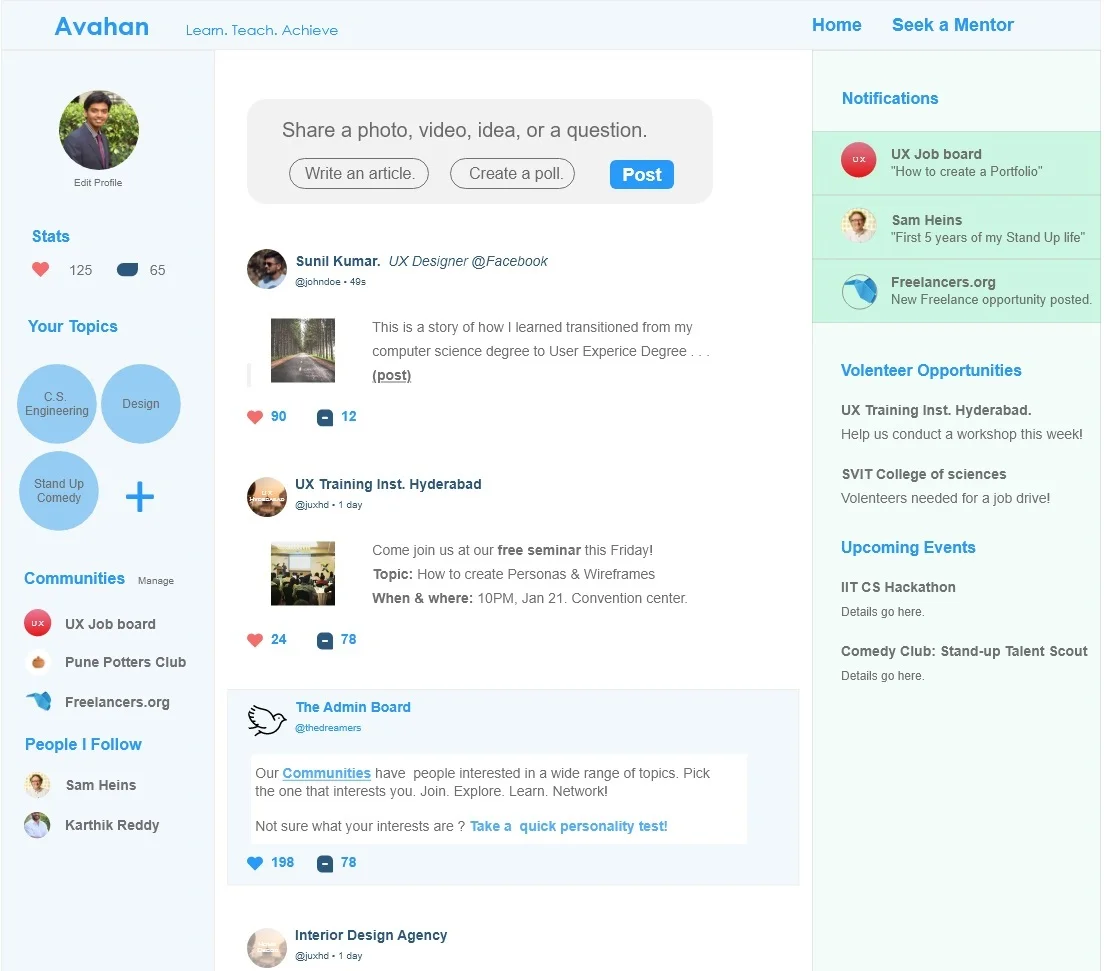
Avahan's web-interface landing page.
What does Avahan do?
It creates awareness - It exposes users to a wide range of disciplines and opportunities which today, the users are unaware of.
It forms a bigger community - Taking advantage of the community centric lifestyles of the users, Avahan provides them a larger and a stronger community to learn and grow together.
Gives access to resources and tools -.It delivers relevant resources, tools, trending news, upcoming events and volunteering opportunities related to their topics of interest right at user’s fingertip.
Connects right people - It connects the right people by creating a pool of mentors who can be approached for guidance by the users for the professional and individual growth.
Features of Avahan
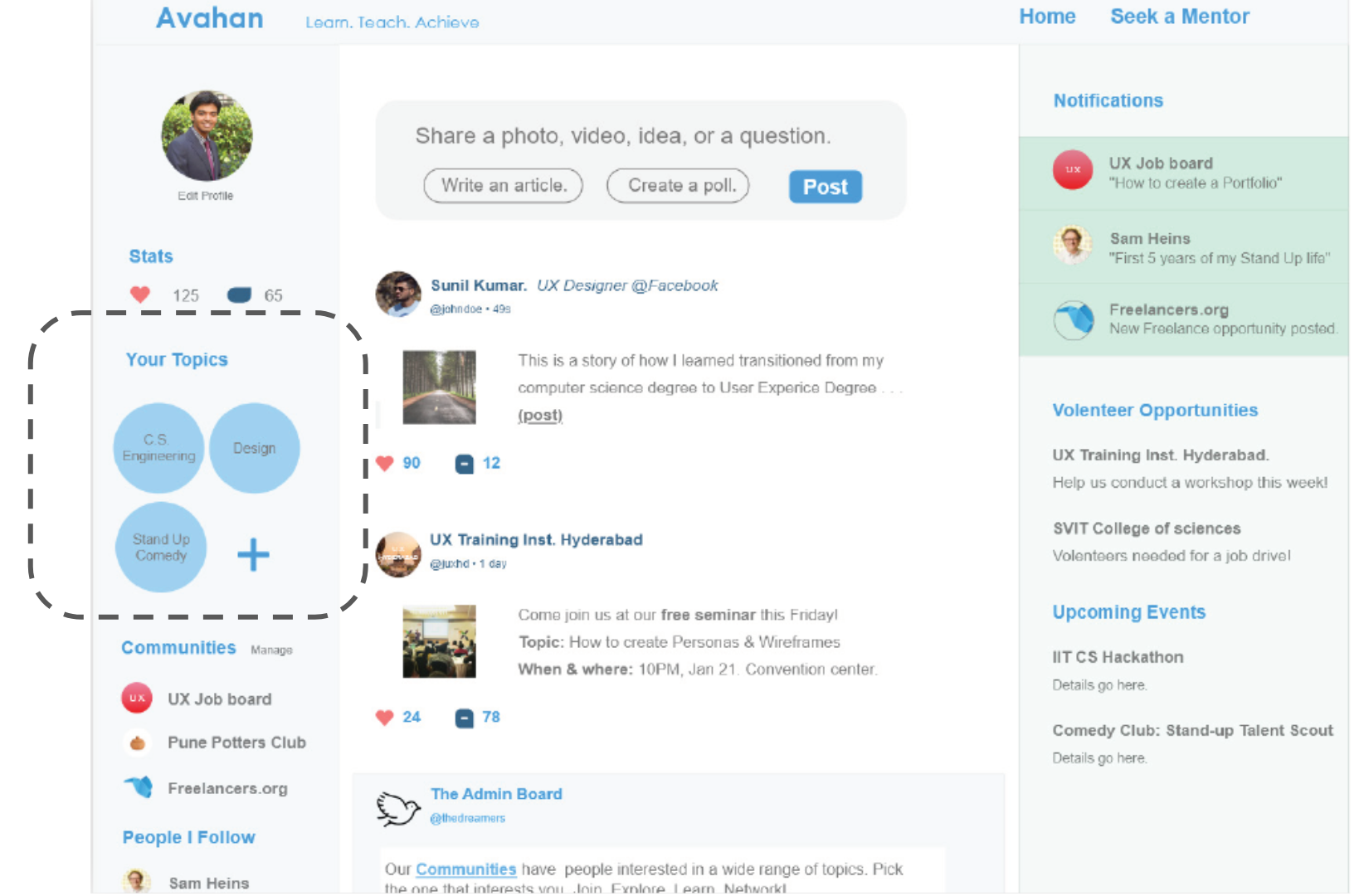
'Topics of Interest'
From the research I learned that my users were unaware of the wealth of opportunities in the form of education and career that exist today in India.
Avahan encourages users to explore different disciplines via this feature. Users can add or remove any topics that they discover in and outside of Avahan anytime they want.
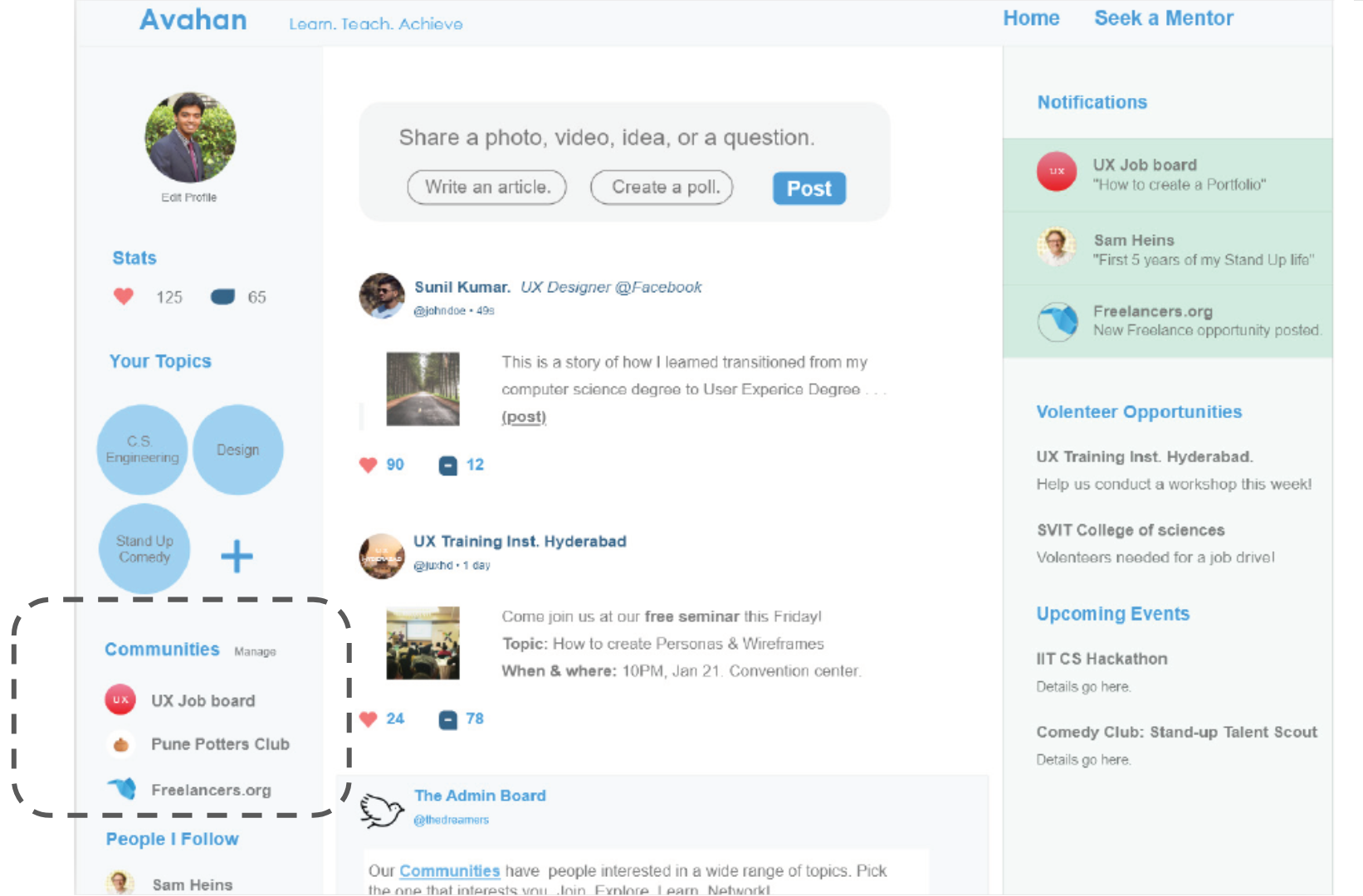
The Feed will display content based on the active 'Topics of Interest'. Avahan will recommend communities, people, and networking events to the user based on the active topics.
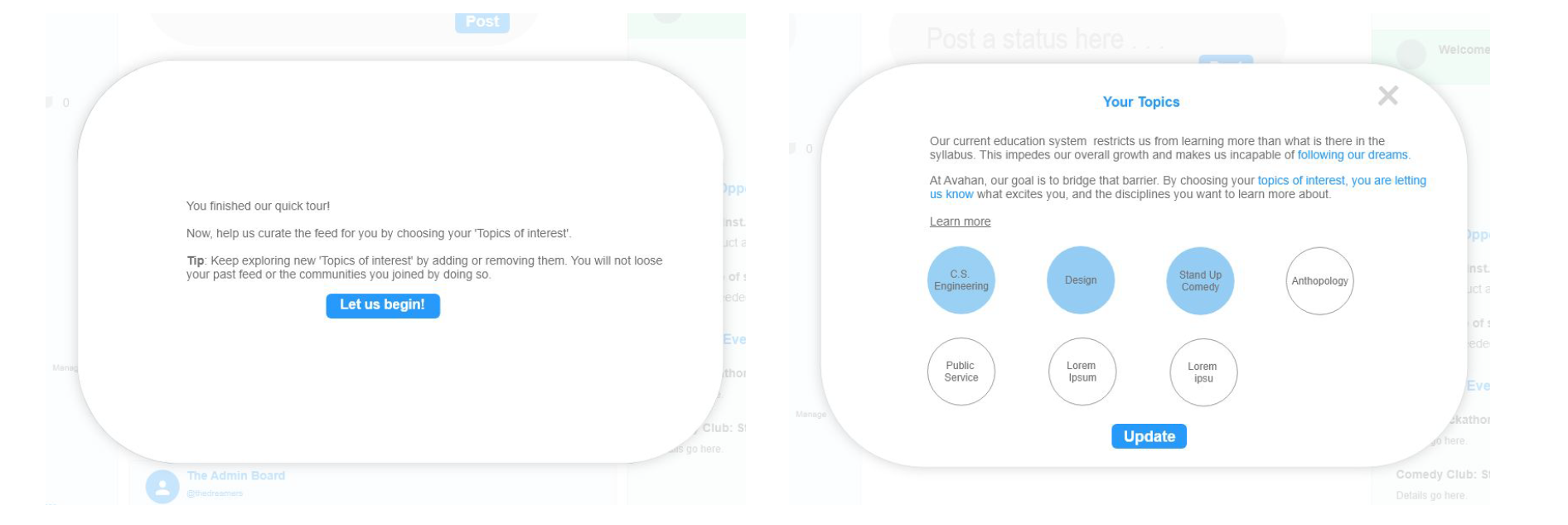
Left: Onboarding experience providing tips to user to help learn how to use the feature.
Right: An interaction showing how users experience adding or removing topics of Interest.
'The Feed'
The feed curates all the relevant resources, tools, tools, trending articles, and important events for the user based on their topics of interest.
Additionally, the feed may recommend new topics to the user based on their previous history.
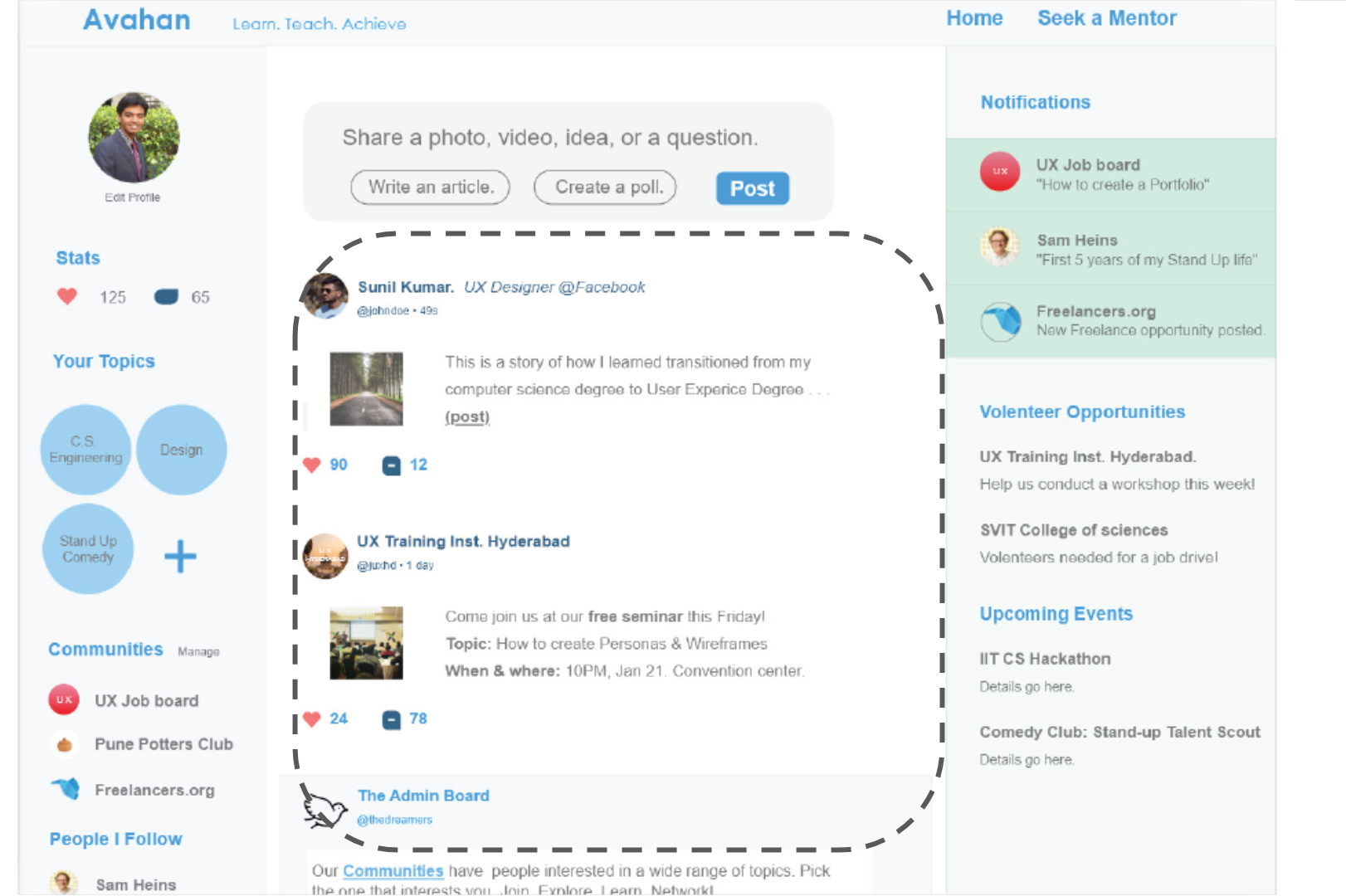
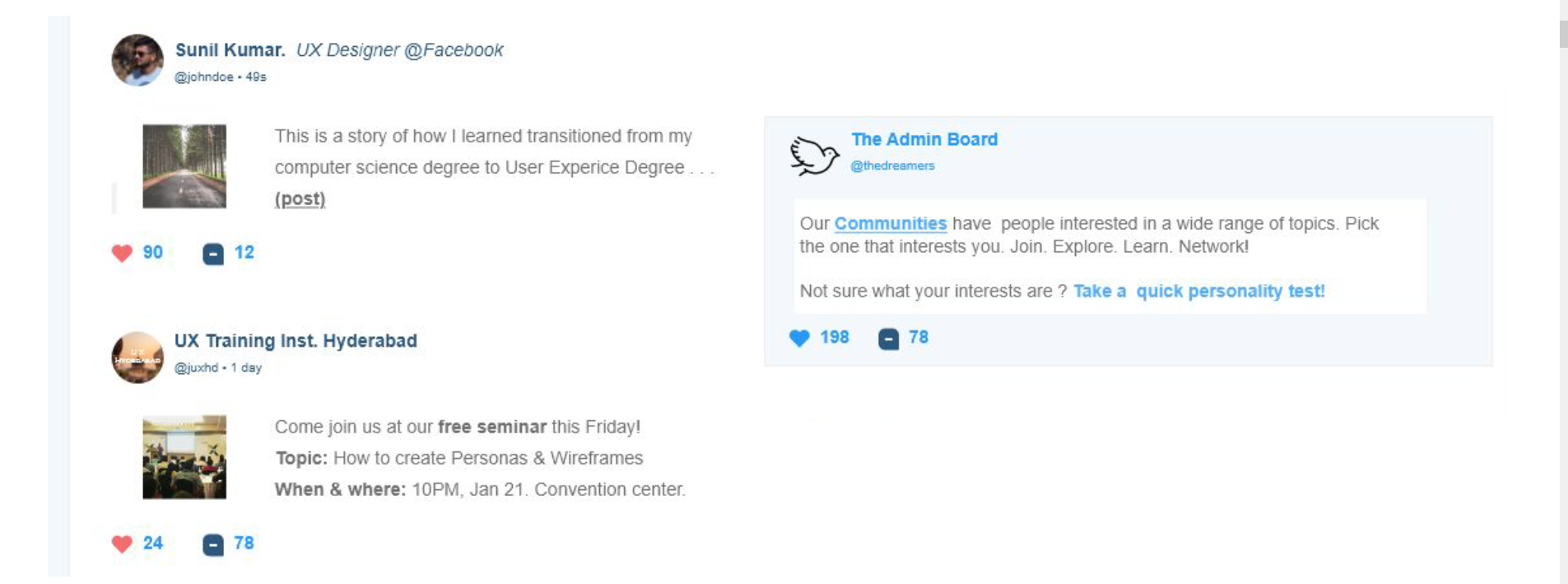
Left: A typical feed for a user interested in UX Design.
Right: 'The Admin Board' features posts that are directly recommended by the Avahan admins themselves.
'Communities'
Another finding from the research was that the lifestyles and the life choices that my users make are directly derived from the community they identify themselves with. The community could be their family, cousins, friends, or the society they live in. In short, my users led highly community centric lifestyles.
Avahan's 'Communities' embrace this quality of the users. These Communities serve as next-to-home for the users. They bring like minded people together and help them dare to dream and achieve their goals. Thereby breaking the barrier that exists today.
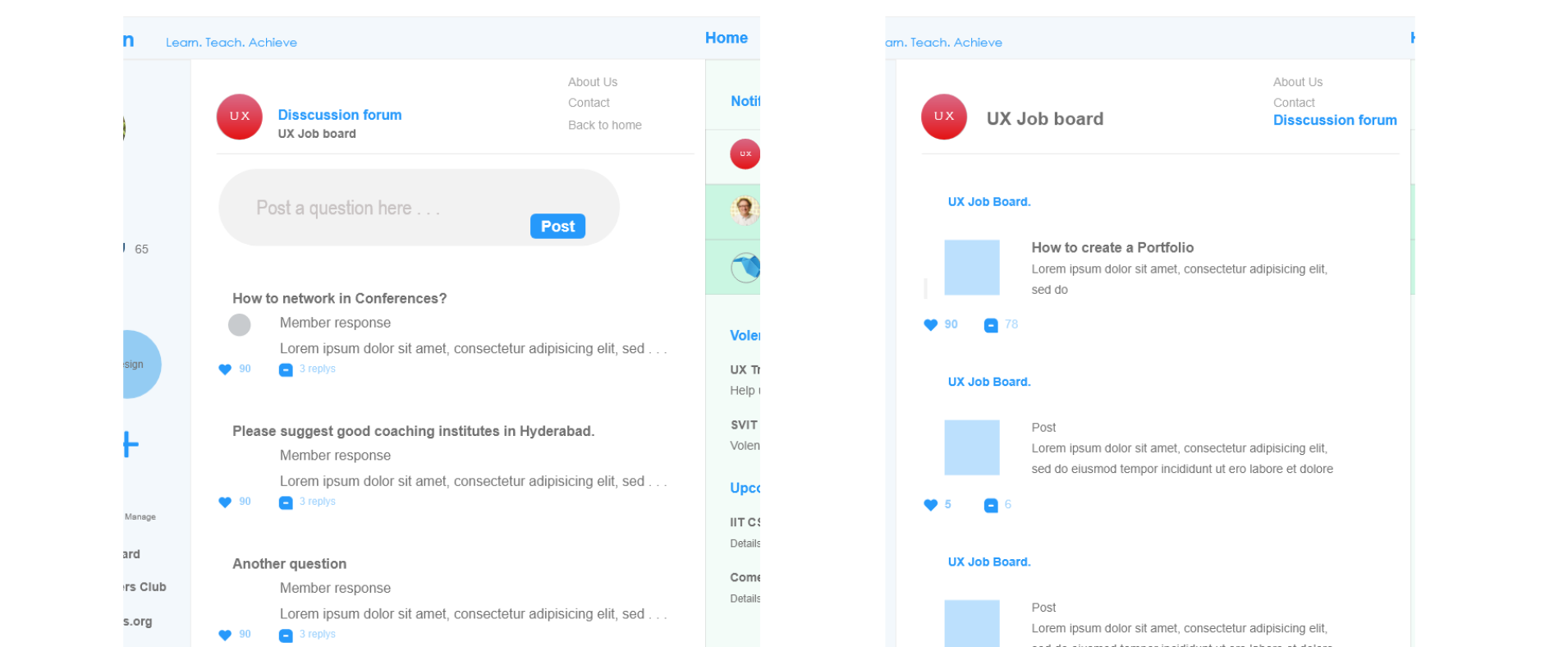
A community for users interested in UX design. Left- A discussion board which acts as an encyclopedia for niche topics related to that community. Right- Community's landing page showcasing what every community member is upto - thus forming a sense of a second family.
'People and Places'
Avahan connects the users with the right kind of people that can help them move forward with their aspirations via the feed and via several of its communities.
'Seek a mentor' feature is designed to help users find mentors. Mentors are people who make themselves available to guide the users in their pursuits for philanthropic or monetary interests.
From research, I discovered that despite of the tremendous growth in use of mobile phone and internet, they are only being used for entertainment purposes. Useful information like upcoming events or volunteering opportunities is still difficult to find even when someone wants to. Avahan bridges this gap by bringing all upcoming events right at user's fingertip based on their topics of interest.
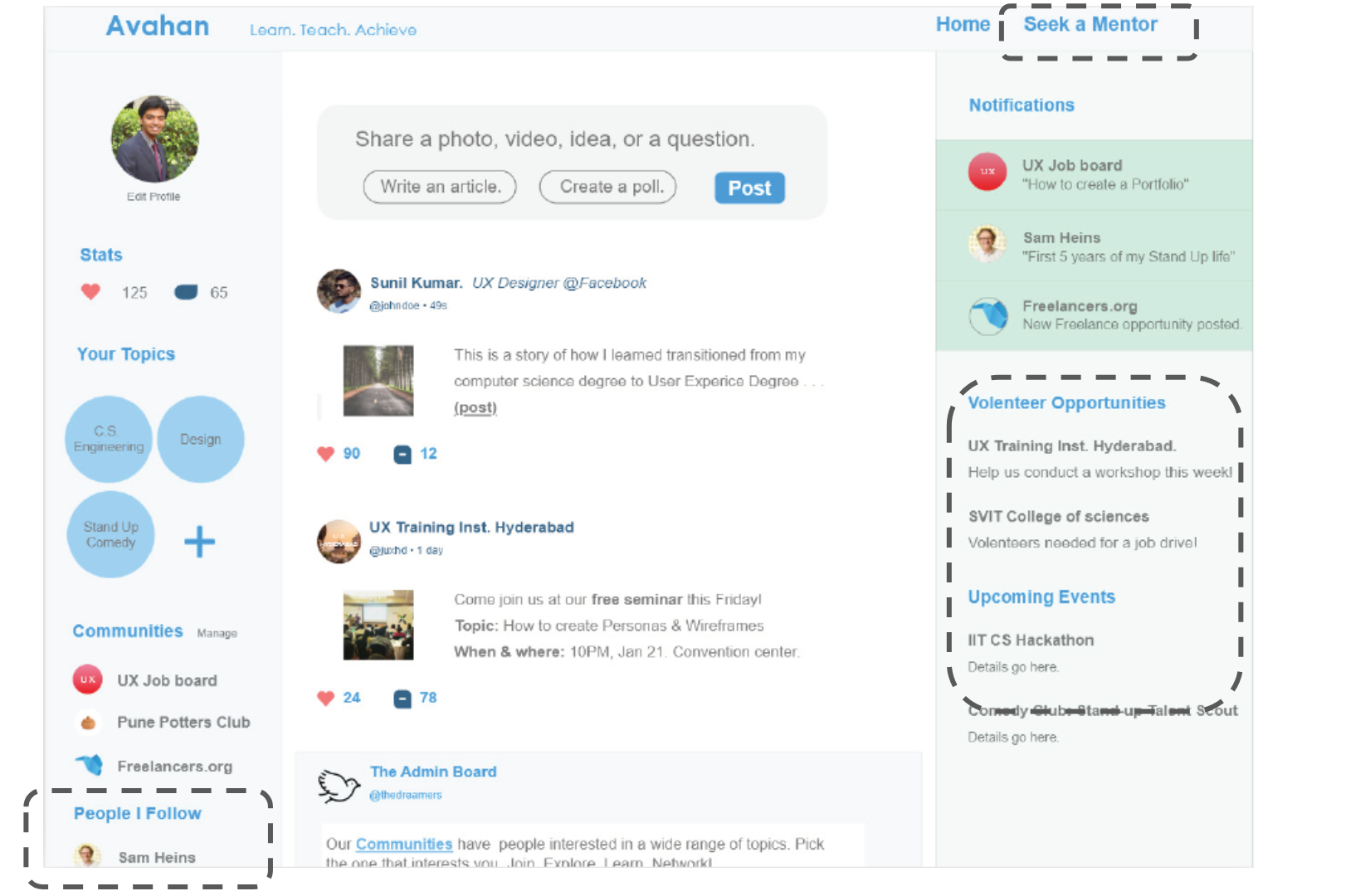
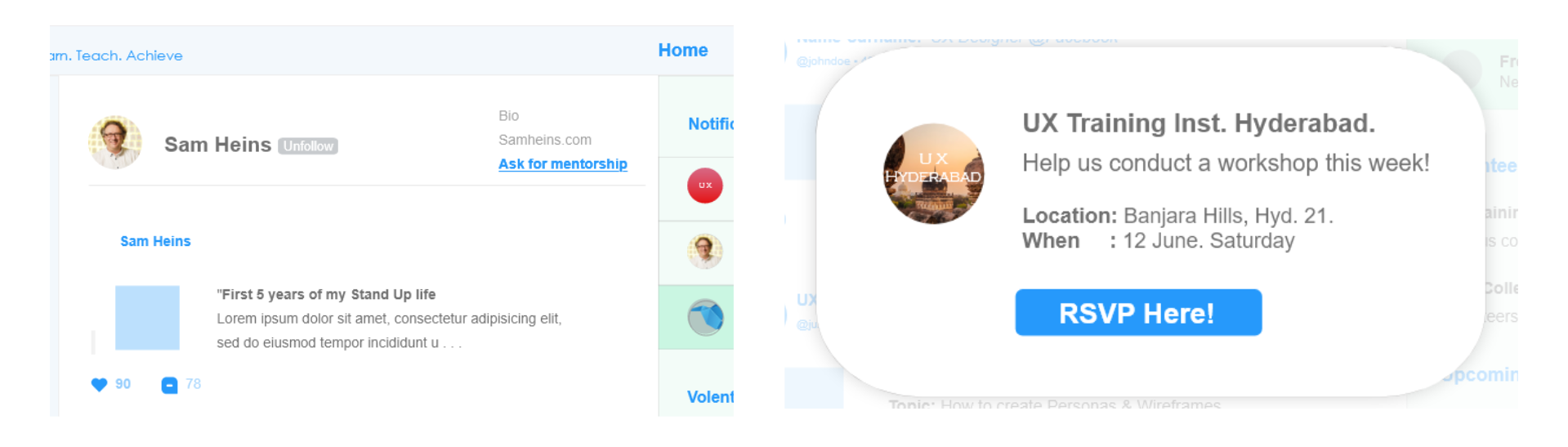
Left - A mentor's profile page featuring an option to ask for mentorship. Right - User interaction when clicked on an upcoming event. These events are uploaded by the organising parties like institutes, companies, colleges, etc. who have their own accounts on Avahan.
Avahan: The Experience
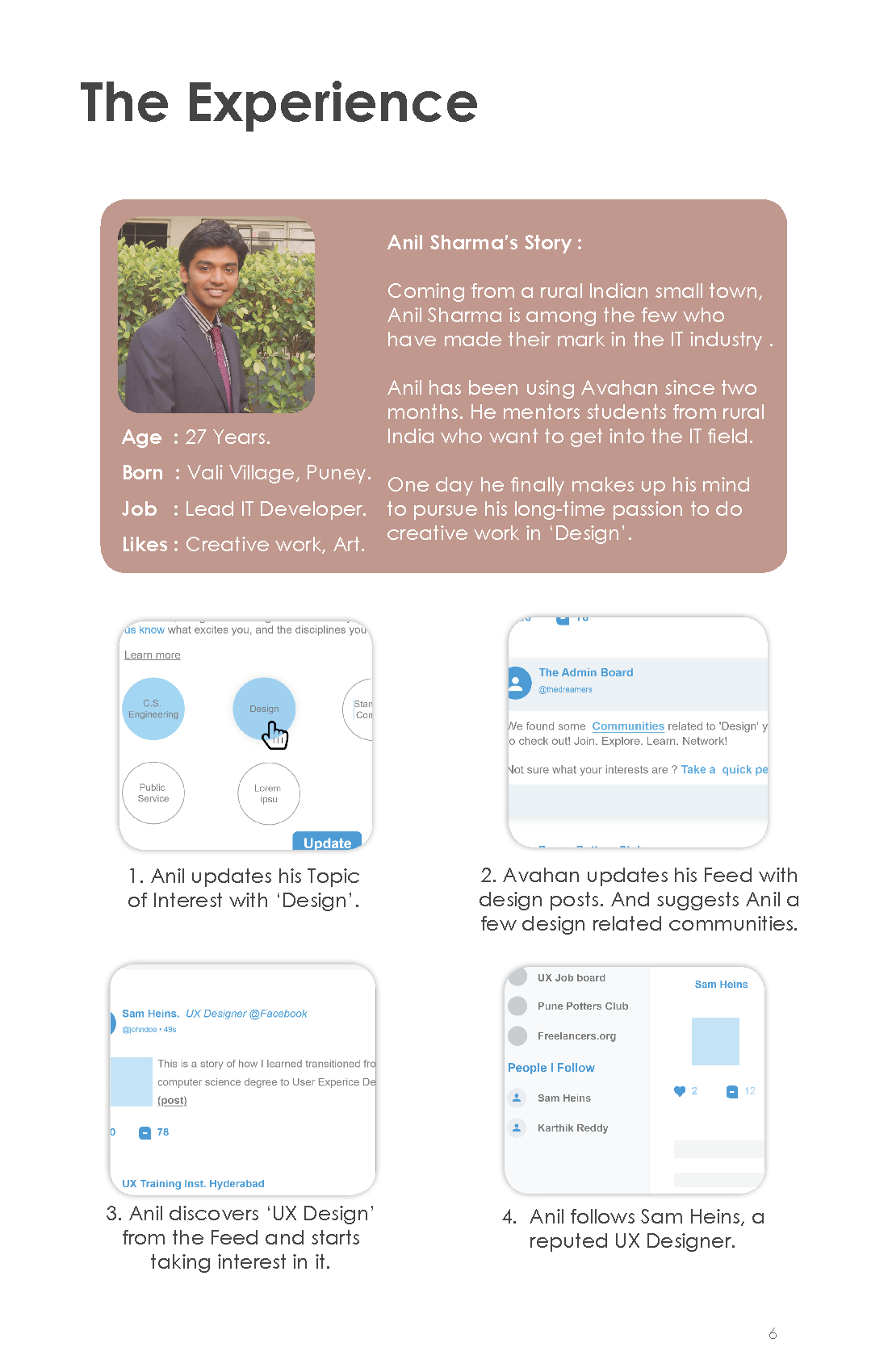
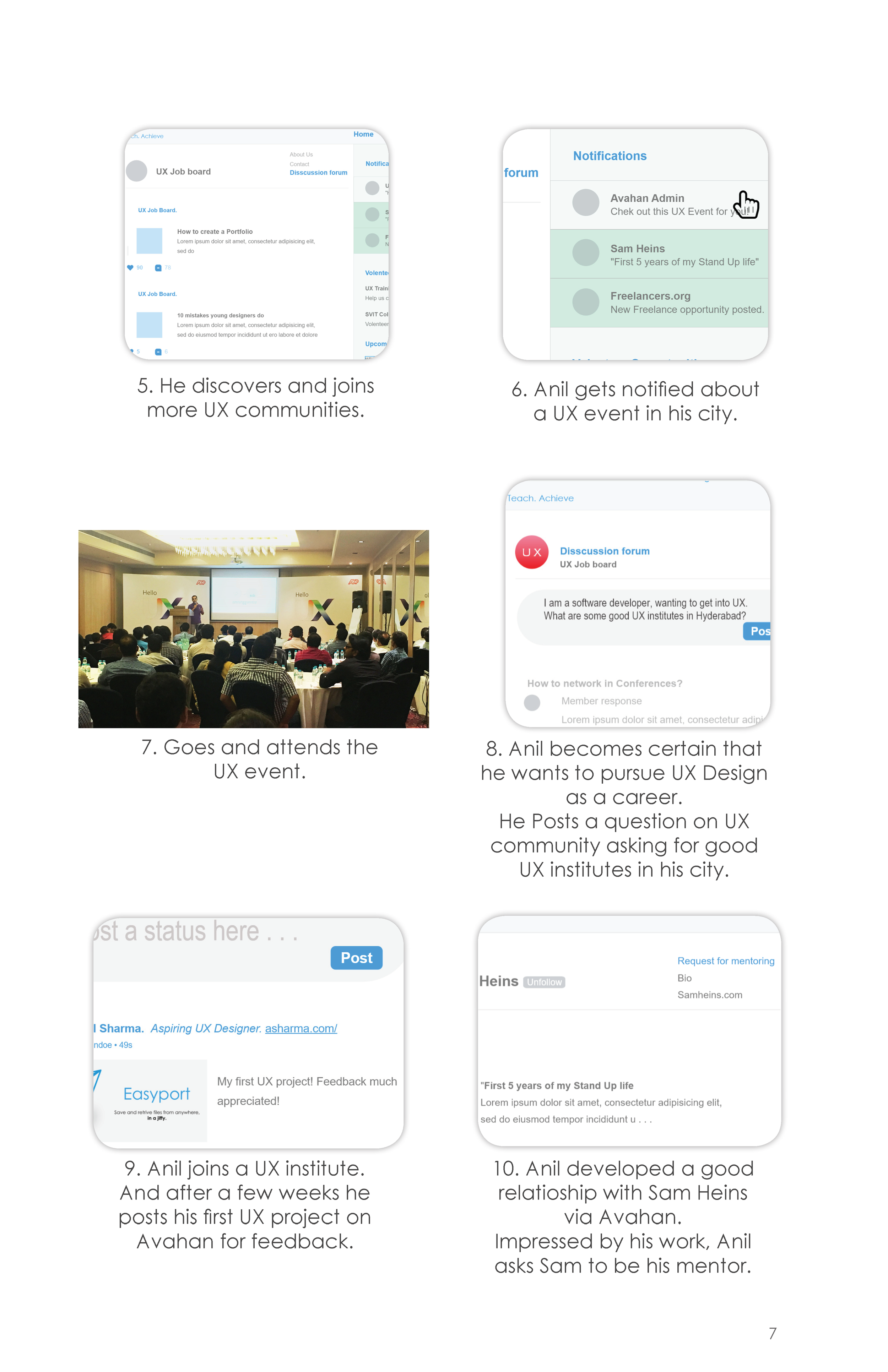
Let us take a look at the following storyboard which tells a story of how, Sunil a software developer who never had any formal education or exposure to try his luck in the creative fields discovers UX Design via Avahan. See how Avahan enables him right from discovery till persuasion and even contribution towards other members on Avahan.
Design Process Overview
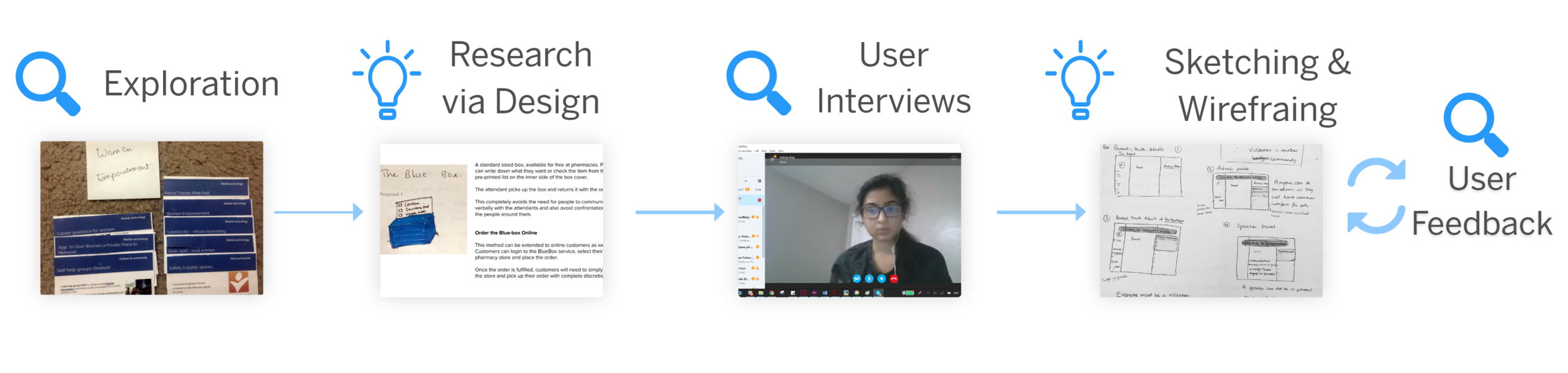
My design process for this project can be summed up as a consecutive rounds of research/expansion and ideation/contraction.
'Research through design' - I used sketching at various levels to explore several different concepts drawn out of research /expansion findings. This helped me to design a final solution which was refined over time, unlike a traditional waterfall model where we would be sketching only towards the end. of the process.
Stage 1: Exploration - understanding the lives of the users.
I started the project with a very open-ended goal of designing for one of the many existing socio political problems that my end users face. Before constraining down to a particular area, I wanted to to understand the life styles, existing opportunities and the constraints that govern my user group's life choices.
Target user group - Middle class and low-income population of India.
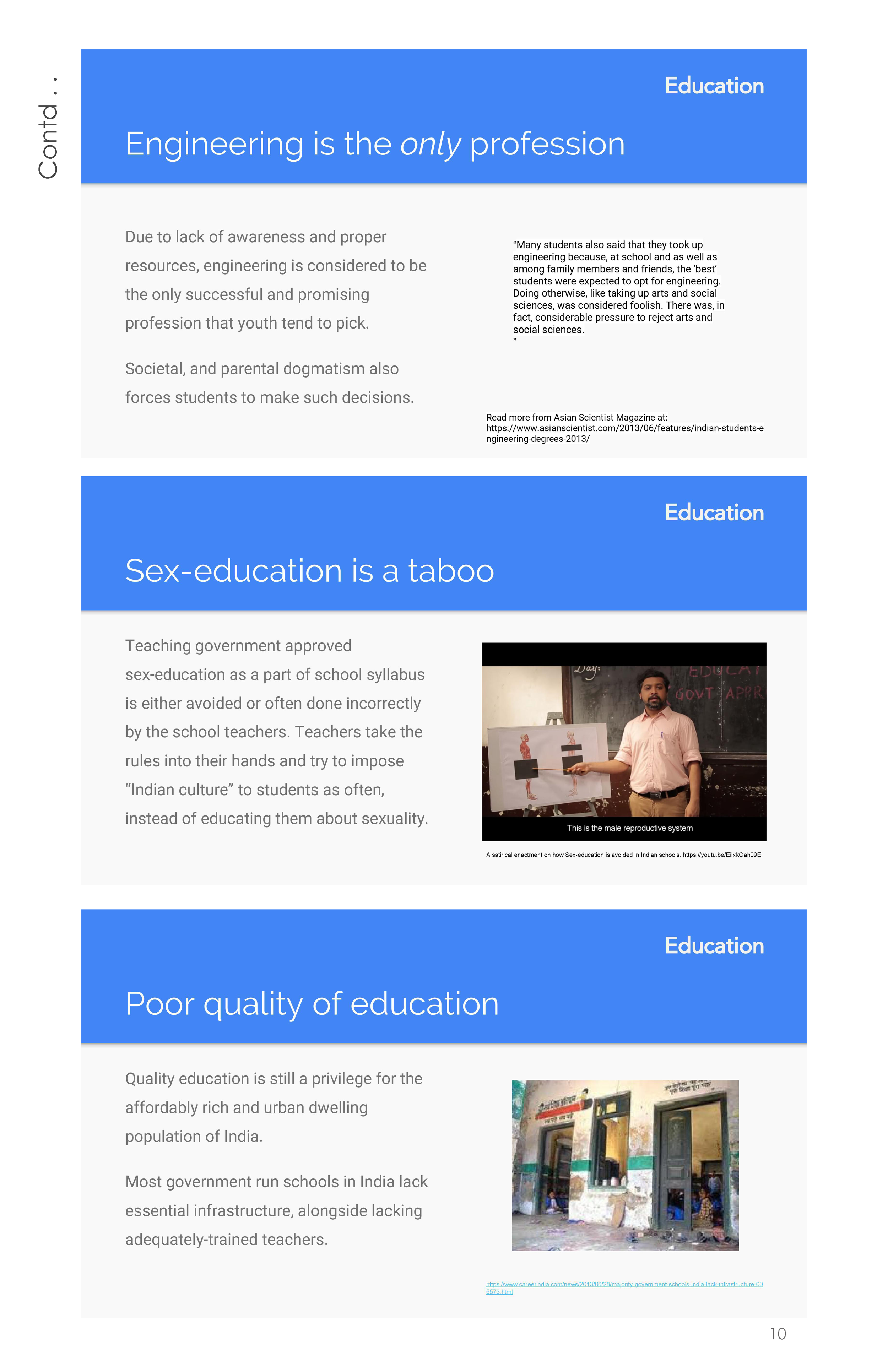
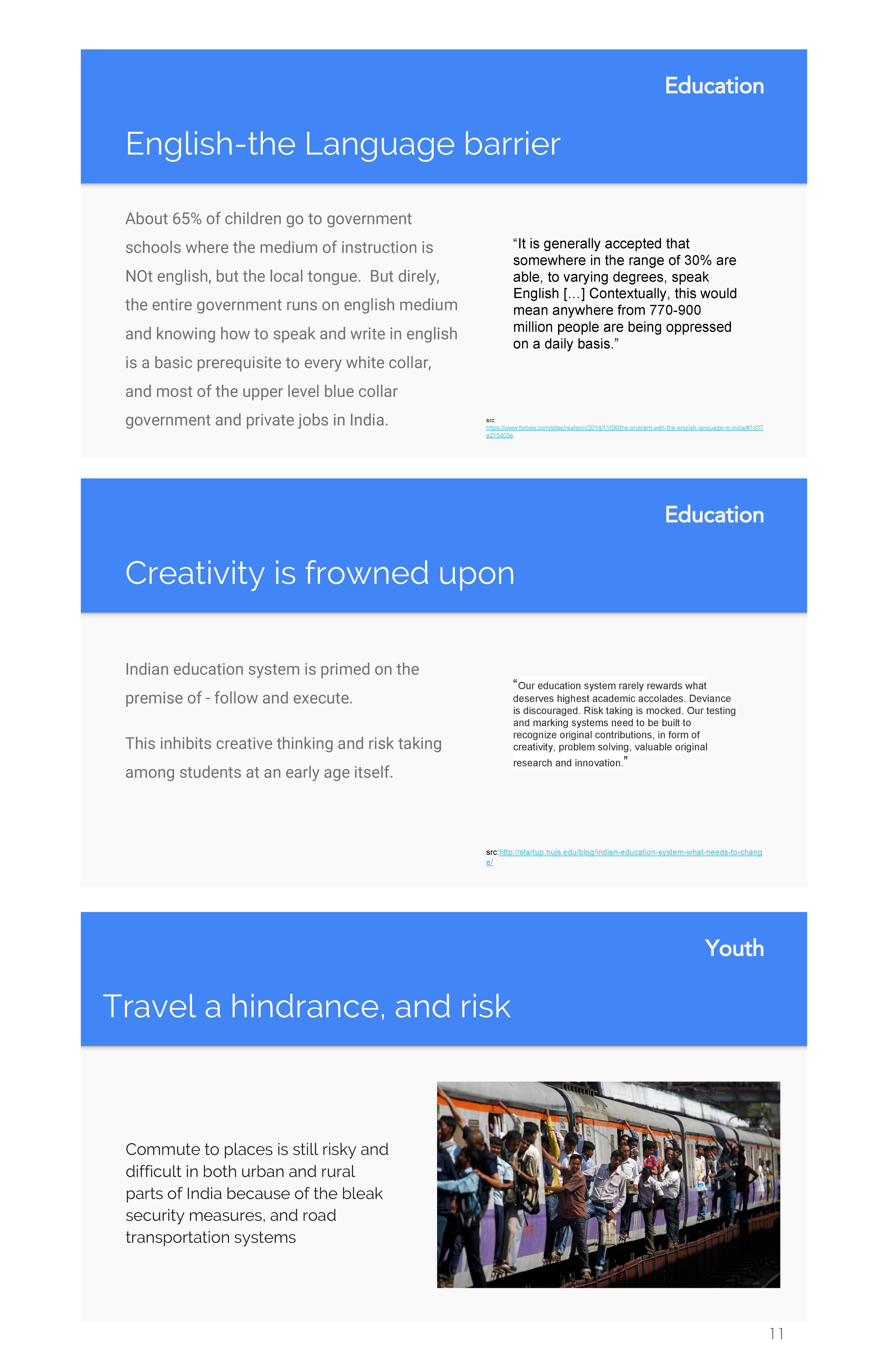
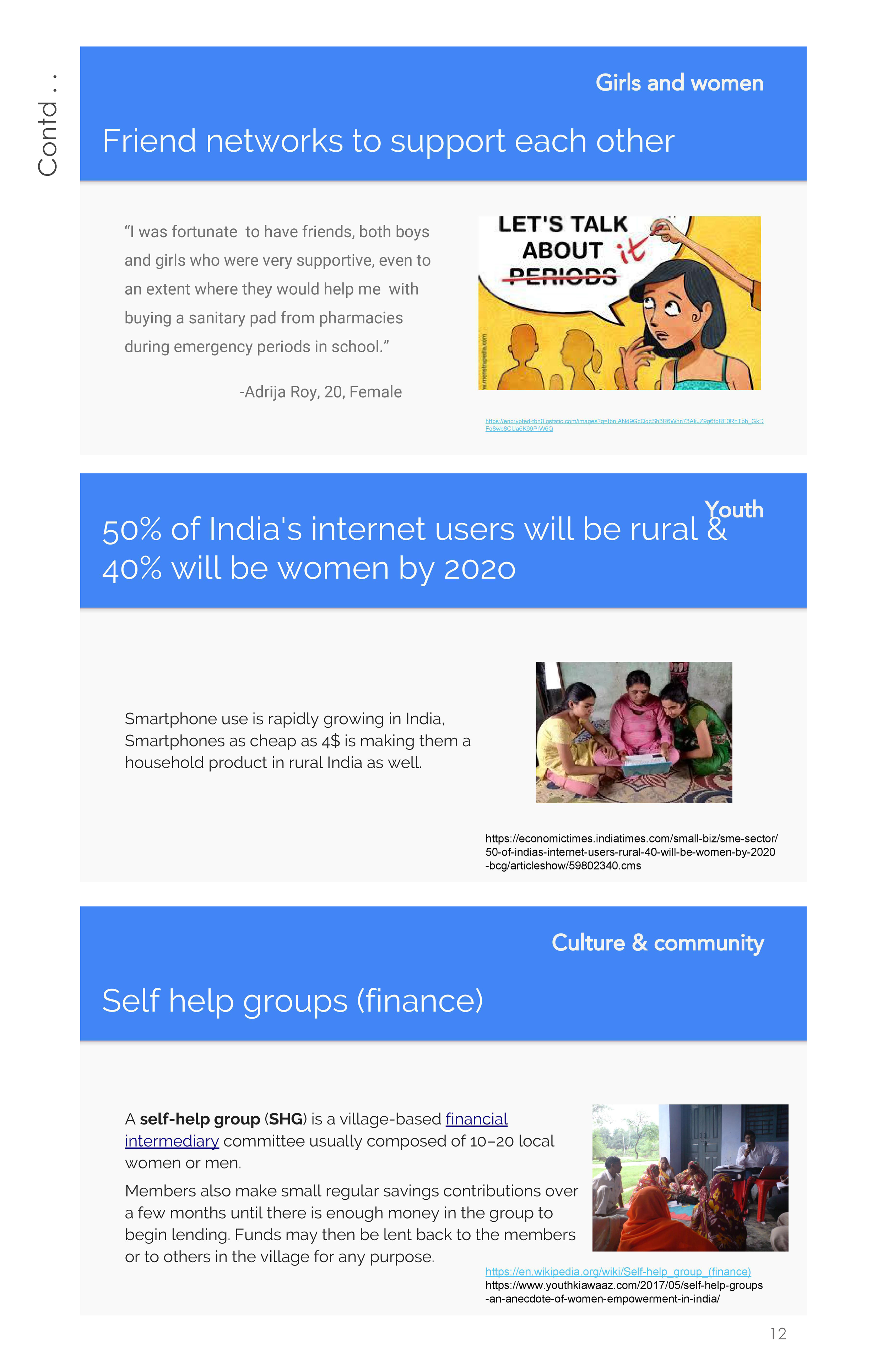
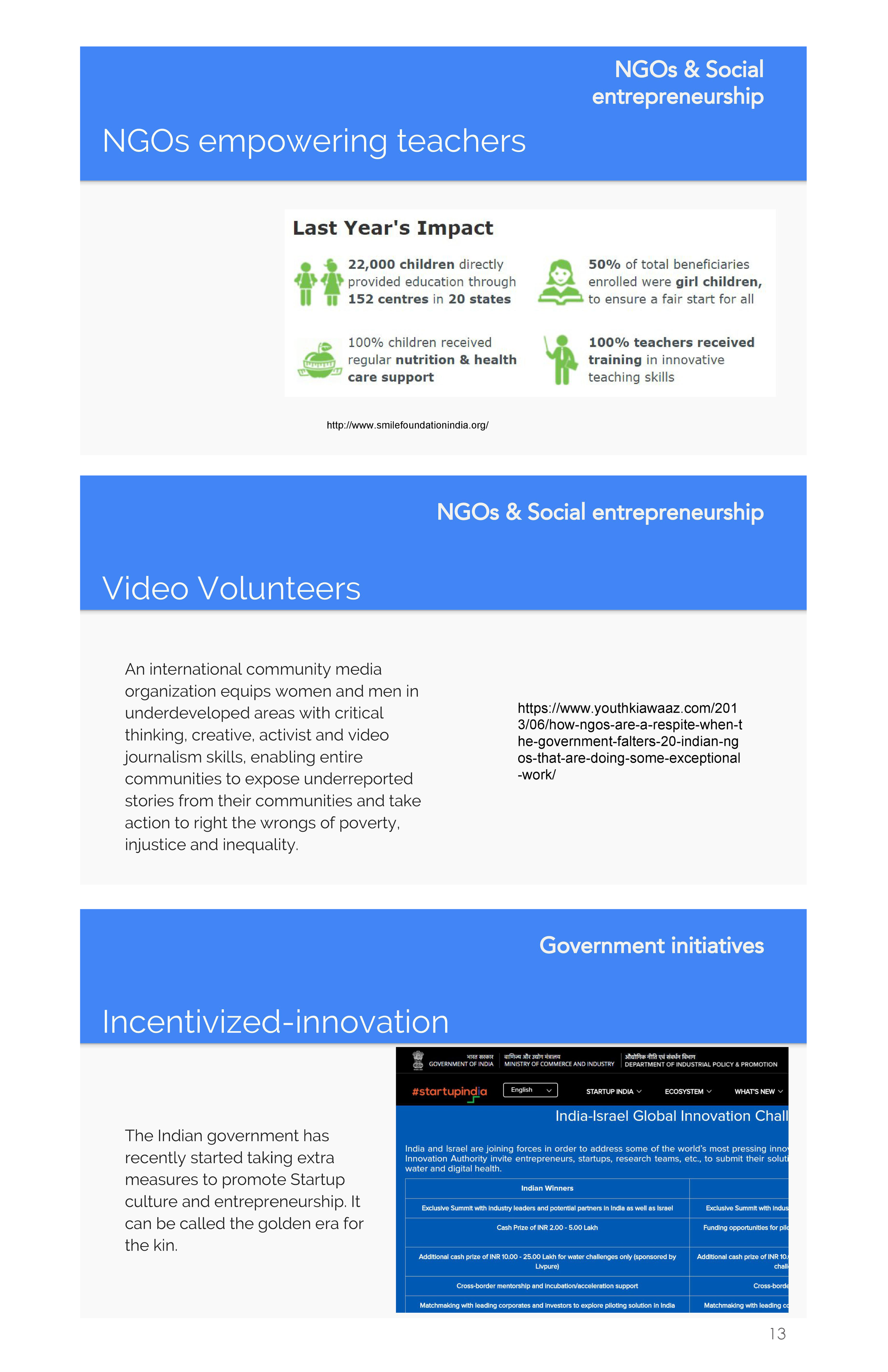
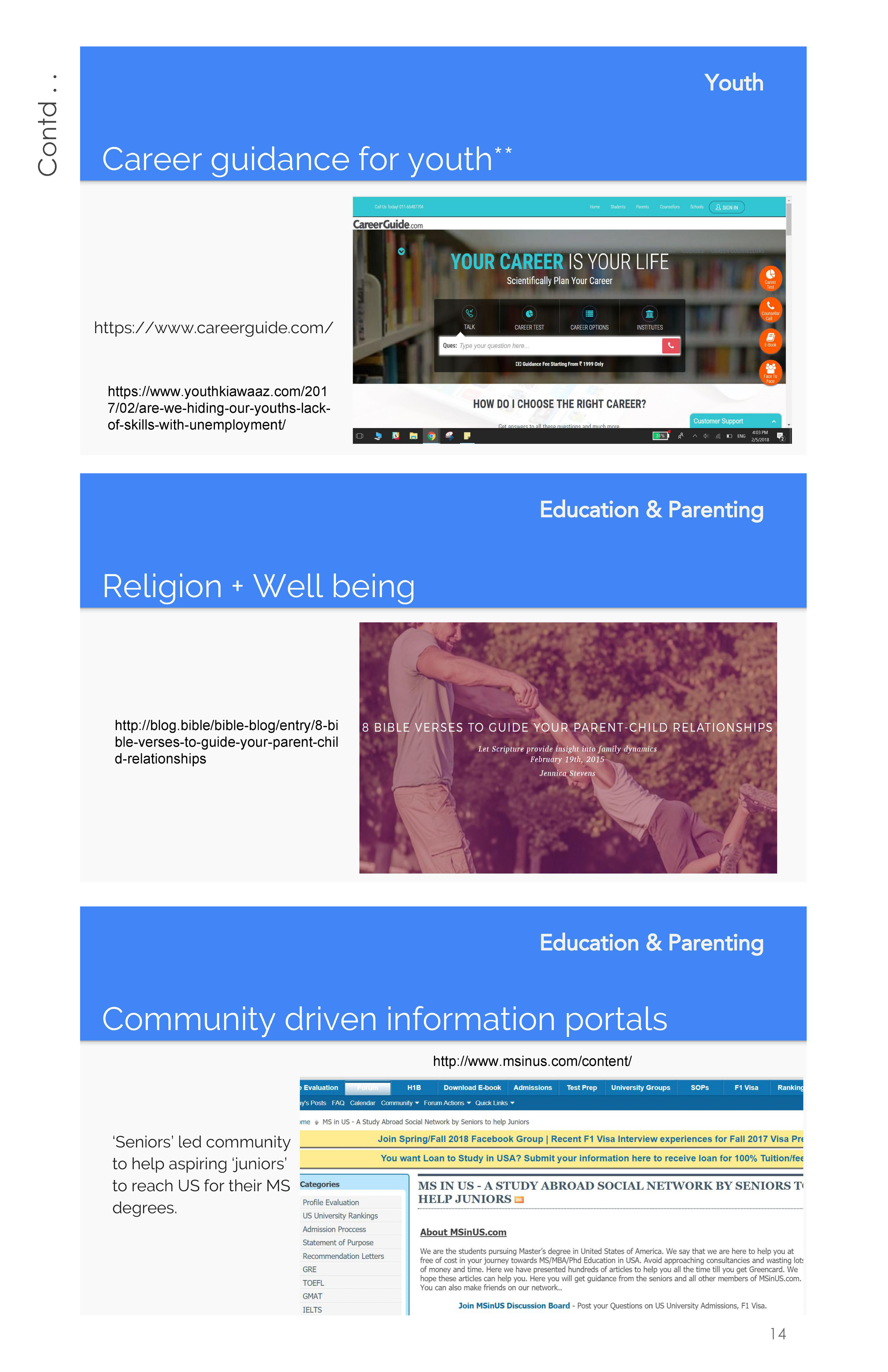
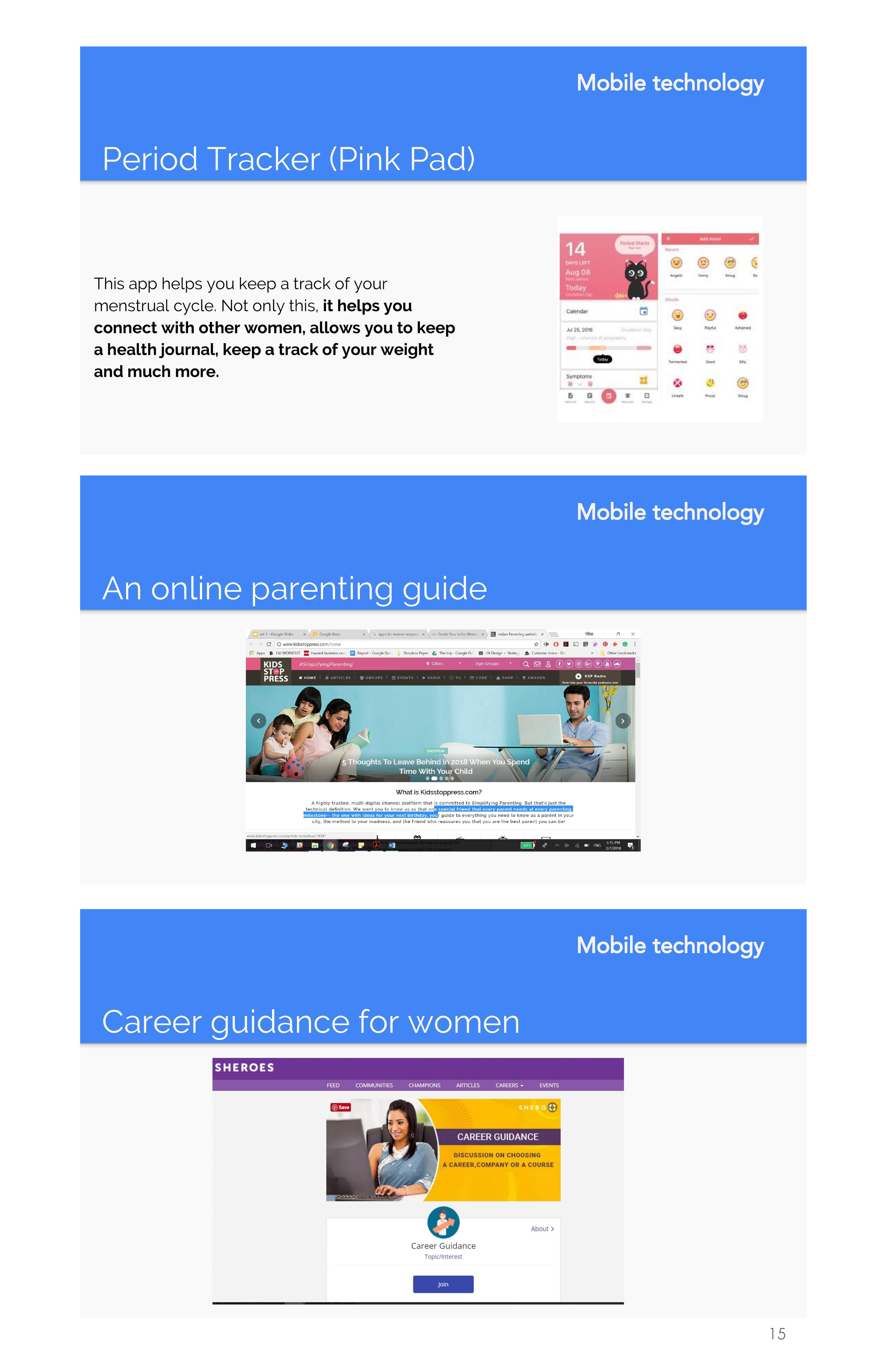
To do this, I collected 100 exemplars covering the existing literature, inventions, and the existing social and political conditions. And I later conducted affinity mapping on the exemplars.
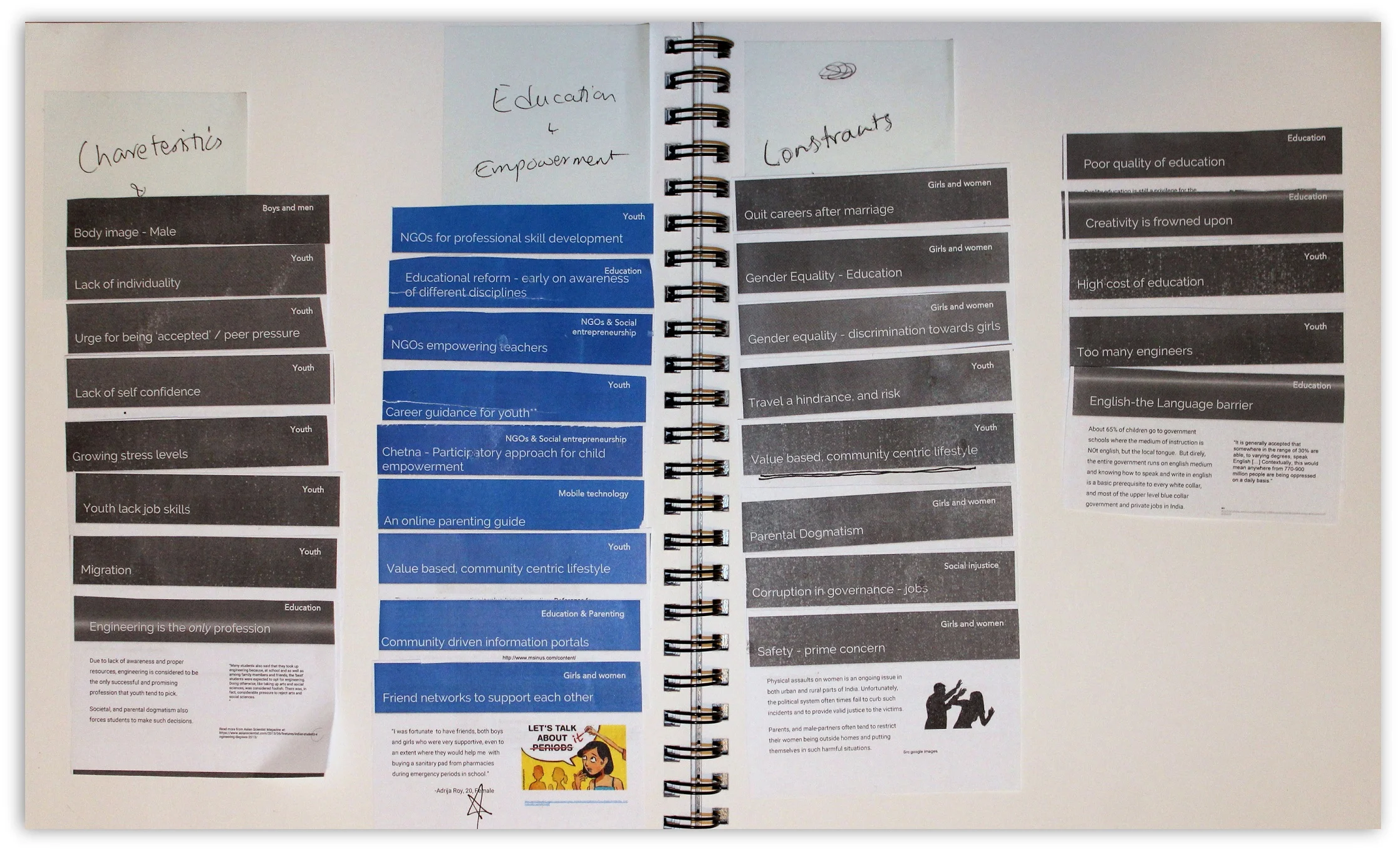
Left: Affinity mapping conducted on the exemplars.
Right: A few select important exemplars.
Insights from affinity mapping
What works? - Community Centric solutions are always successful, while storytelling is a medium that dearly attracts the user group.
Commute & cost are are a huge hindrance for my user group owing to their feedle economic stature.
Agents - The community, NGOs, IT, the government. Are the agents who can facilitate social change. Interestingly, I found that a lot of social activism was being initiated in India via NGOs.
Stakeholders - Parents, children, youth, adults, educators can be identified as the stakeholders and all of them are dearly important for the project.
Fields of interest - I identified scope for designing for education, body-image, gender equality, nutrition, mental Health, sexual health, and women empowerment.
Stage 2: Contraction- Constraining to a singular focus area
A lot of interesting and important problems worth designing were identified after the exemplar collection. I decided to constrain my focus area by balancing between my intent, access to resources, time, and the impact/urgency of the problem.
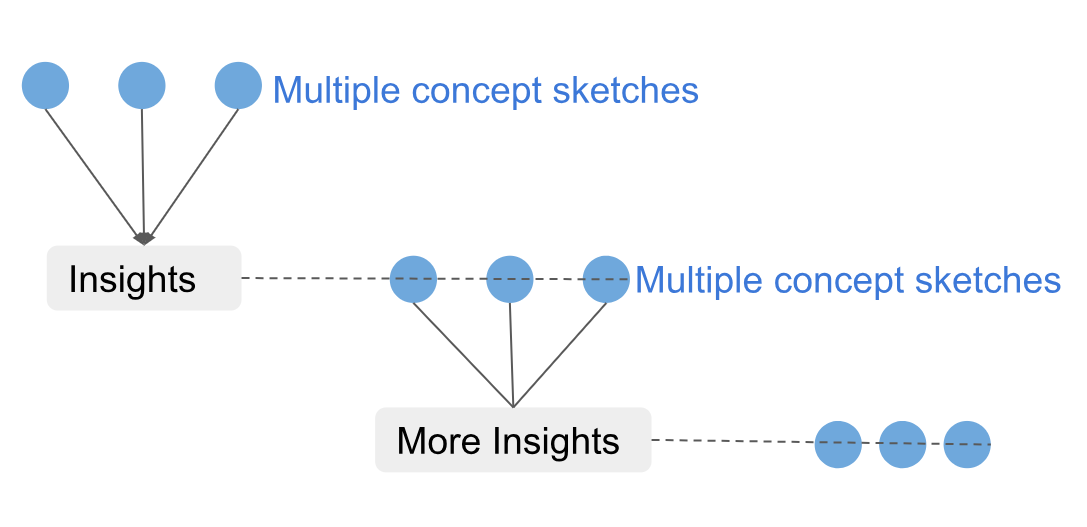
Iterations of expansion and contraction via 'Research through design'.
To do this I used 'Research through design' method. I quickly drafted design concepts on topics including sexual health, body image, and career awareness. I used these concepts to better understand my intent, my access to resources, and the impact. And finally decided to constraint down to 'Education and individual growth'.